Nov 3, 2026
Why Does Your Essential Oil Always Smell “Strong at First and Weak Later”? Unpacking the Uniform Diffusion Logic of Venturi Two-Fluid Atomization Nozzles
If you use the same Essential Oil in the same room but smell two completely different scents from different devices, it is not your imagination. Ultrasonic diffusers dilute essential oils in water; the water mist settles quickly, and the aroma layers are “watered down.” Heated diffusers volatilize the lighter top-note molecules first, leaving a flat, dull base. What really determines whether an aroma is uniform, long-lasting, and complete is not the grade of the essential oil, but what happens at the moment of atomization. The reason Venturi two-fluid atomization technology can change the way scent reaches the nasal cavity lies in the gas–liquid convergence structure inside the nozzle—and Qiwuecy is turning this structure from engineering parameters into mass-producible product solutions.
First, Understand the Problem: Why Most Diffusion Methods “Spread Unevenly”
Ultrasonic diffusers rely on high-frequency vibration to break a mixture of essential oil and water into droplets. This method is quiet and low-cost, but the droplets carry a large amount of water, greatly diluting the essential oil and causing the particles to settle faster. A more hidden problem is the water tank: after long-term use, emulsified oils tend to adhere to the inner walls and the vibrating plate, forming a residual film that affects atomization efficiency and increases maintenance burden [2].
Heated diffusion takes another path. It volatilizes essential oil by raising the temperature. It looks like “pure oil,” but high temperatures preferentially evaporate low-molecular-weight, highly volatile terpenes. These molecules are precisely the freshest top-note sources in citrus and floral essential oils. Once the top notes are “burned off” in advance, the remaining scent naturally becomes dull and monotonous.
The common weakness of both methods is this: the atomization energy comes from an external heat source or mechanical vibration, rather than direct momentum transfer between the gas and liquid phases. The essential oil is not truly “torn apart”; it is only “shaken apart” or “evaporated apart.”
The Venturi Effect: Using a Stream of Air to “Draw Up—Tear Apart—Spray Out”
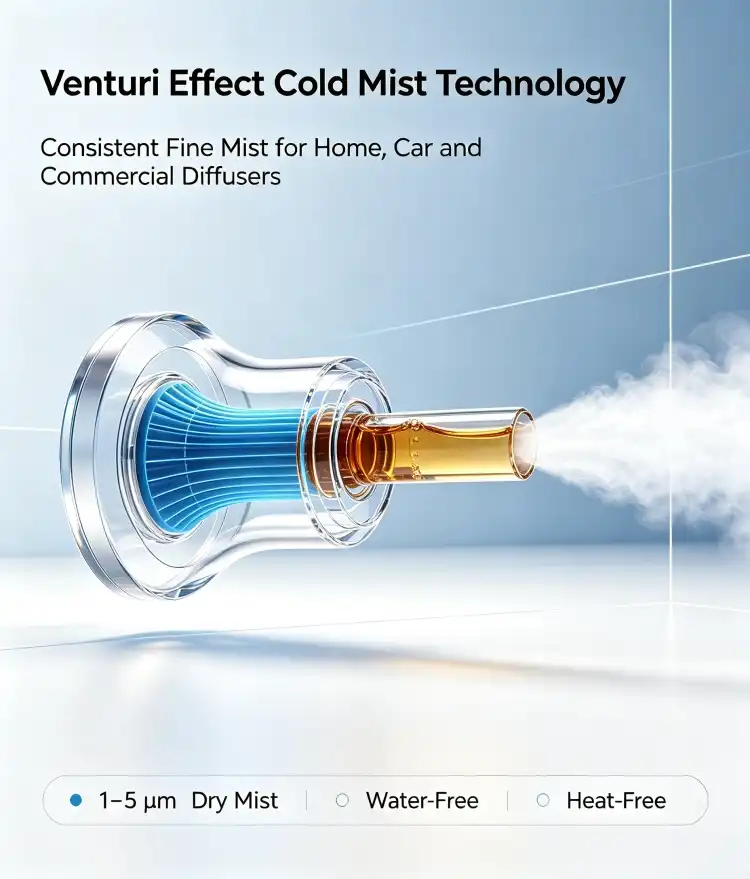
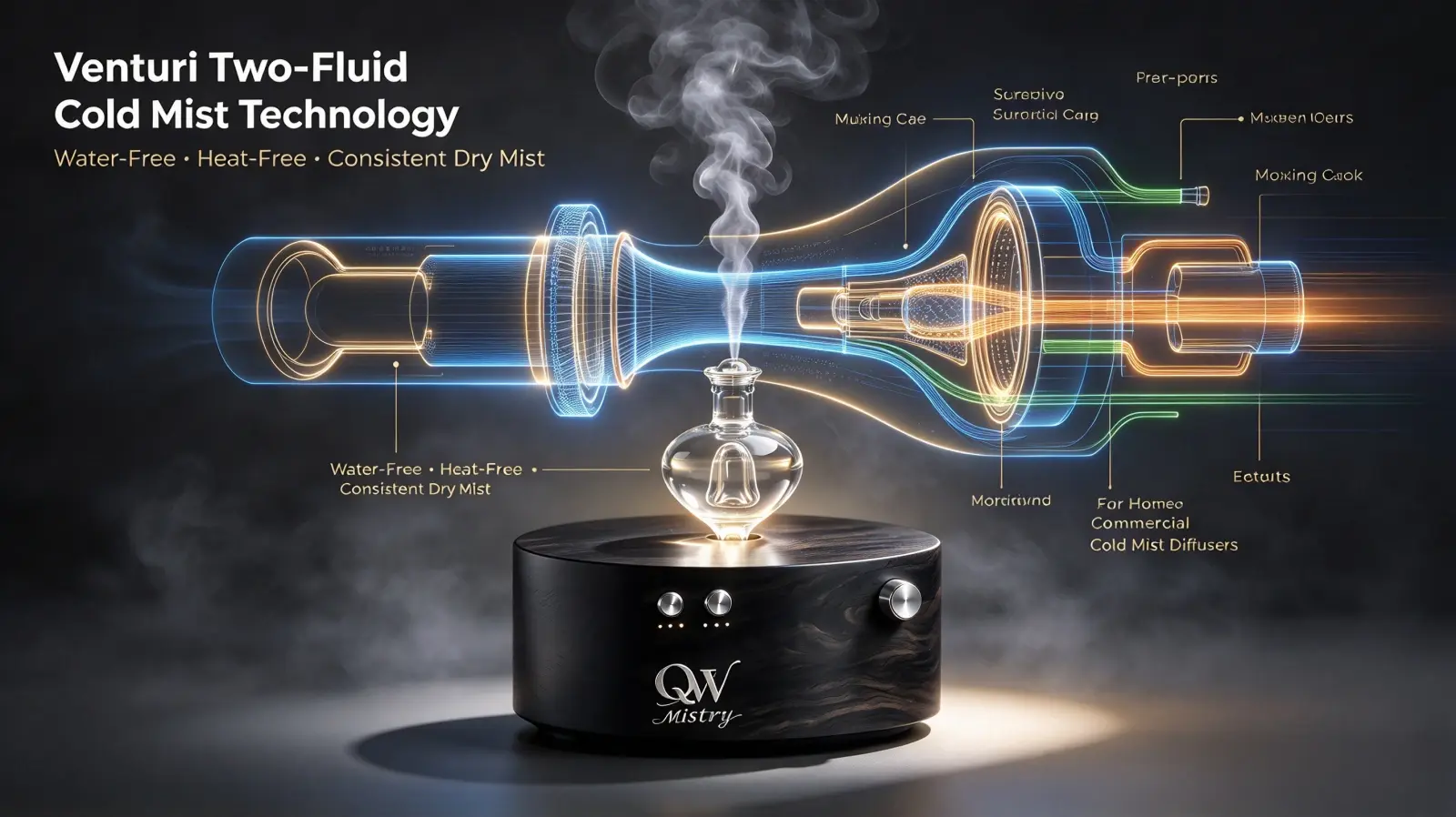
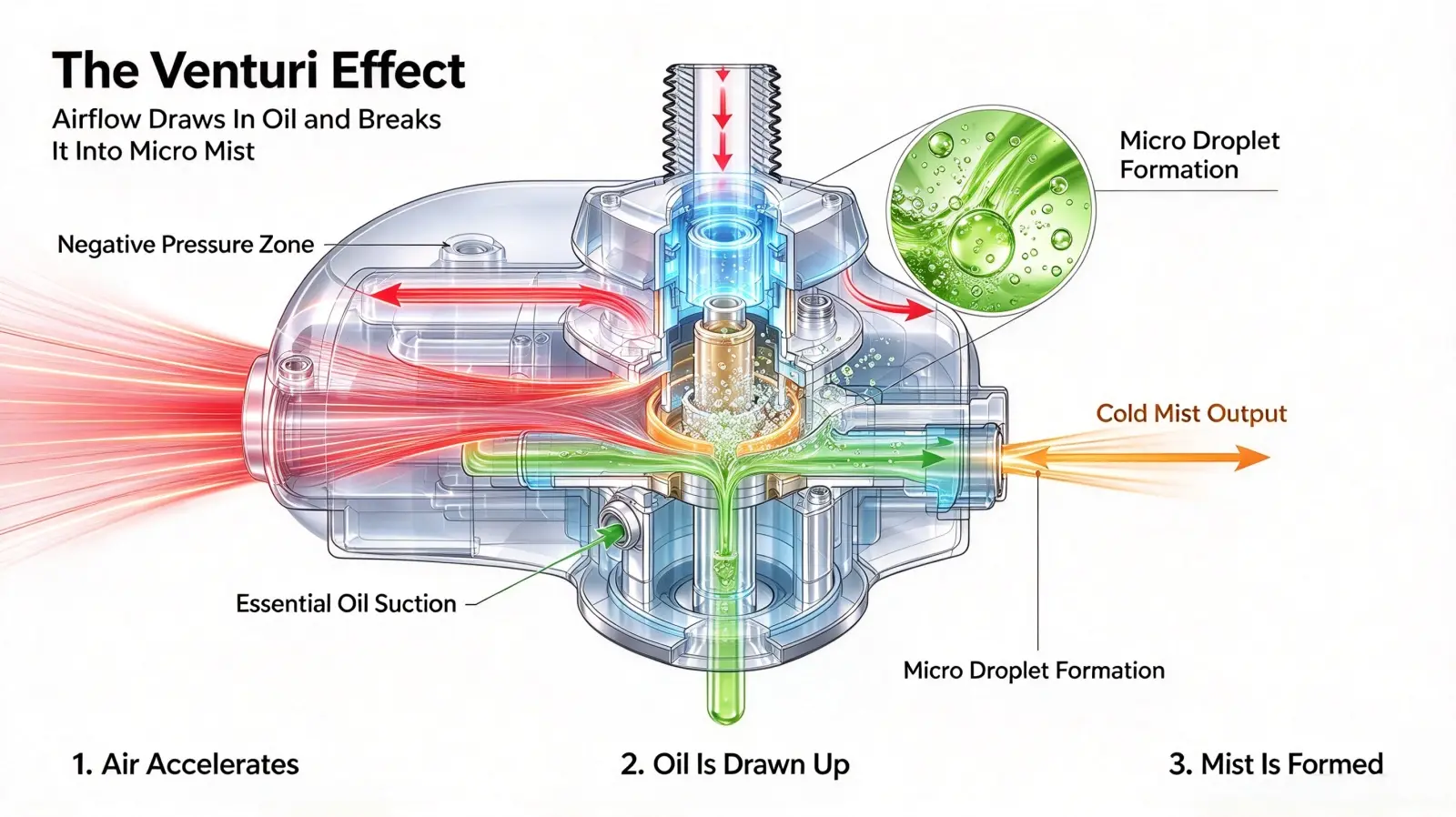
The physical basis of a two-fluid cold-mist nozzle is the Venturi effect. Compressed air is pumped into a channel inside the nozzle whose cross-section sharply contracts—the throat. According to Bernoulli’s principle, the higher the fluid velocity, the lower the static pressure. When high-speed air passes through the throat, the local pressure drops sharply, forming a negative-pressure zone. Through a thin tube, pure essential oil is drawn up from the oil reservoir and meets the airflow at the nozzle orifice. Subsequently, the shear force exerted by the high-speed airflow on the liquid stream stretches the essential oil into films and ligaments, and the ligaments break up into micron-sized droplets under surface tension. The entire process does not rely on heating and does not add water; only air and pure essential oil participate in atomization.
A useful quantitative benchmark comes from a two-phase flow nozzle test based on the Venturi effect: at an air pressure of 0.2–0.3 MPa, droplets in the 3–65 μm range can account for more than 85%; when the pressure is raised to 0.4 MPa, this proportion further rises to 98% [1]. This shows that the atomization output of a Venturi structure has a clear response relationship to air pressure, rather than being an uncontrollable “rough range.”
It Is Not Enough to “Have a Venturi”: The Internal Nozzle Structure Determines Whether Atomization Is Uniform
The Venturi effect itself is not new; the nozzle of a perfume bottle is the simplest example. But diffusion scenarios place much higher demands on atomization consistency and continuity. In its two-fluid atomization core design, Qiwuecy has made targeted improvements around several key constraints:
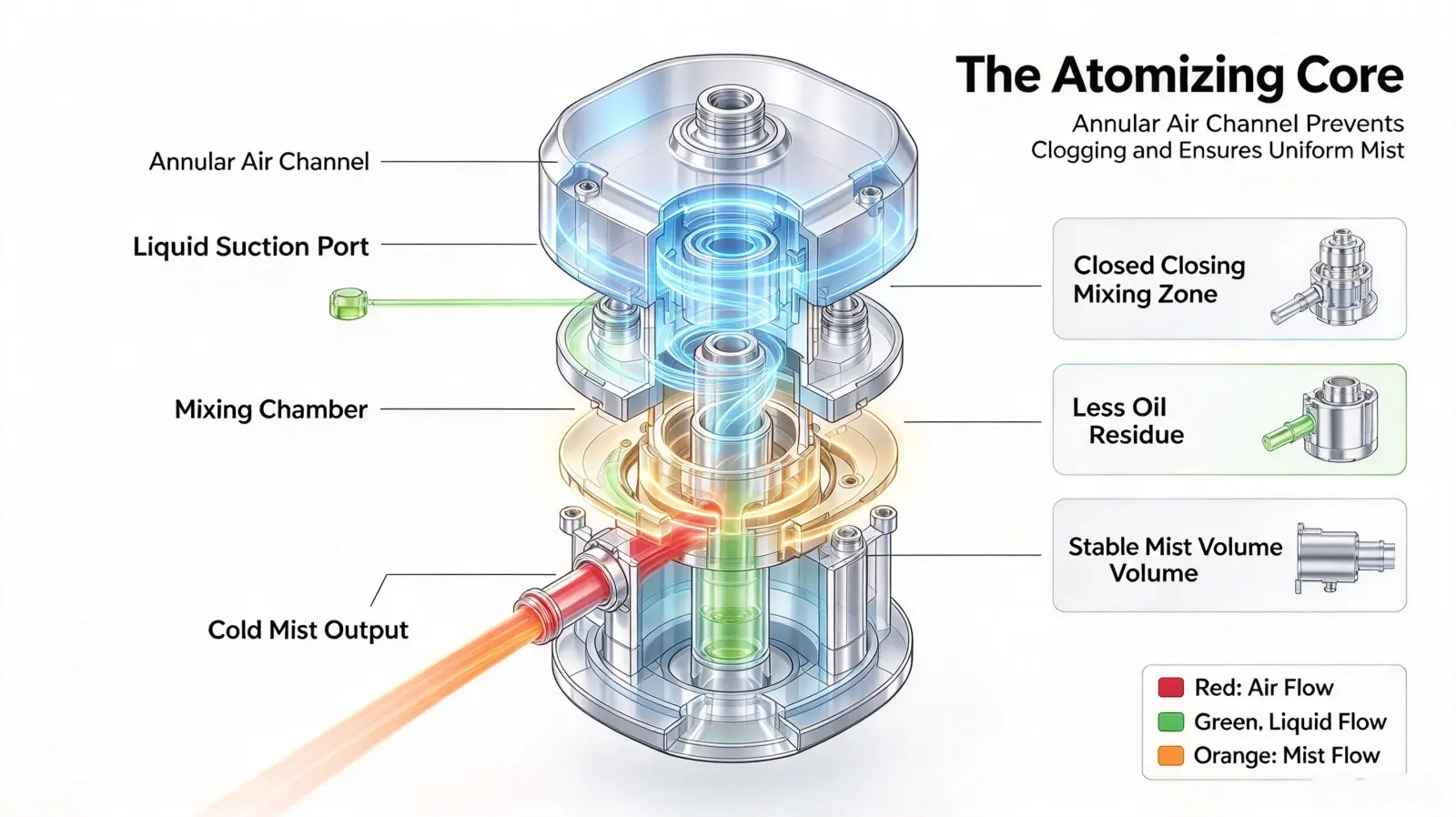
Annular air path and spiral injection. Compressed air does not rush straight into the throat in a single direction. Instead, it is guided through an annular channel to form a spiral high-speed airflow. The spiral path extends the gas–liquid contact distance, making the shear action more complete and the atomized vapor–liquid mixture denser, rather than an uneven state of “a ring of mist outside and a stream of liquid in the middle.”
A relatively enclosed annular atomization zone. The nozzle head constrains the gas–liquid convergence area within a relatively enclosed annular space. Pressure is concentrated here rather than dissipating in all directions. With the same input air pressure, the enclosed structure generates a stronger negative pressure, making oil suction more stable and atomization volume more consistent.
Anti-oil-accumulation and anti-clogging design. After long-term operation, conventional two-fluid nozzles with fine orifices tend to accumulate heavy components of essential oil at the orifice edge, gradually changing the effective cross-section and causing atomization drift or even clogging. Qiwuecy’s atomization core adopts a more open outlet structure, reducing the滞留 contact area between essential oil and the orifice wall and physically lowering the risk of oil accumulation. This is particularly critical for commercial scenarios that require continuous operation.
Quantitative Metrics for Atomization Quality: SMD and Distribution Index N
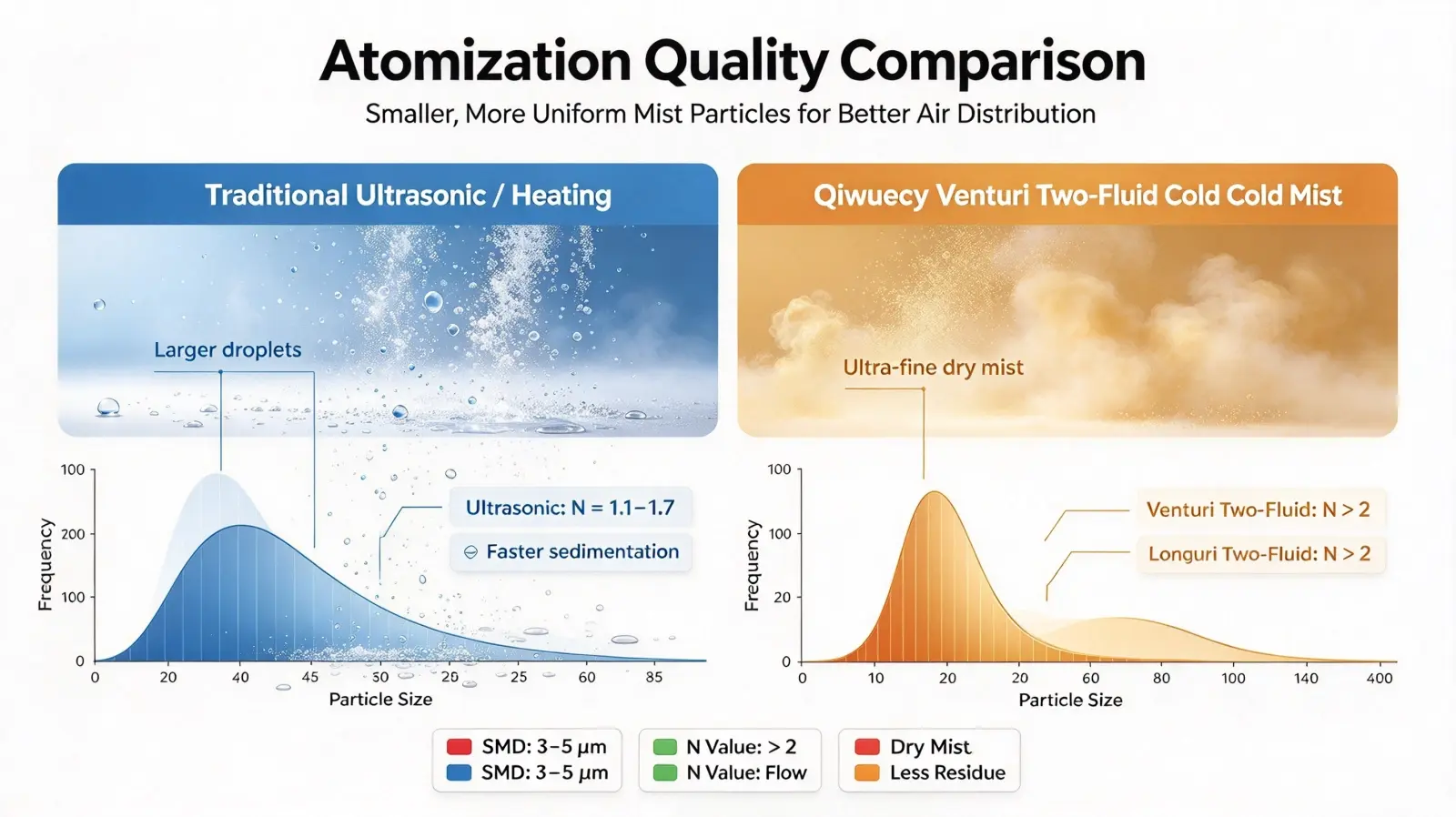
To evaluate the atomization level of a two-fluid nozzle, do not look at “how big the mist is,” but at two parameters: Sauter Mean Diameter (SMD) and distribution index N.
SMD reflects the average fineness of the droplet population. The dry mist produced by commercial two-fluid cold-mist systems usually falls in the 3–5 μm range; Qiwuecy’s structural design controls SMD at ≤ 10 μm, ensuring sufficient suspension time and aroma activation speed. The distribution index N measures the uniformity of particle size: the larger N is, the narrower the particle size distribution, meaning most droplets are concentrated within a small range. The N value of ordinary ultrasonic atomization is roughly between 1.1 and 1.7; after structural optimization, the Venturi two-fluid solution can reach >2. The more uniform the distribution, the more consistent the settling behavior of droplets, and the more significantly the aroma concentration gradient in space is compressed.
From Parameters to Products: How Qiwuecy’s Two-Fluid Technology Lands on Three Types of Cold Aroma Diffusers
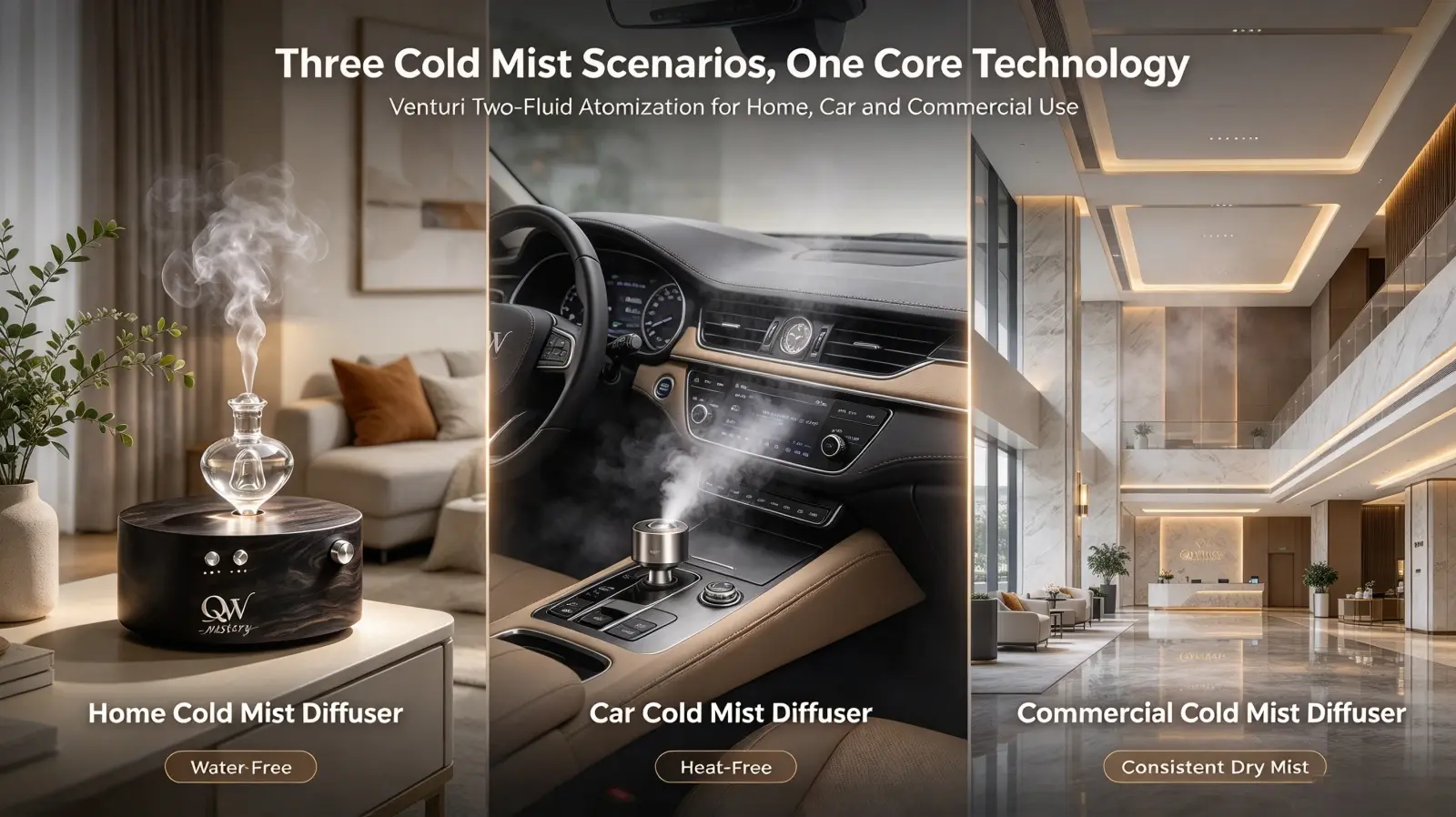
Technical parameters alone do not constitute a product rationale. The reason Qiwuecy’s two-fluid atomization platform deserves consideration at the product-definition stage is that the same atomization-core logic can make different structural trade-offs for three usage constraints: home cold aroma diffusers, car cold aroma diffusers, and commercial cold aroma diffusers.
Home Cold Aroma Diffusers: Glass Reservoir and Wireless Freedom
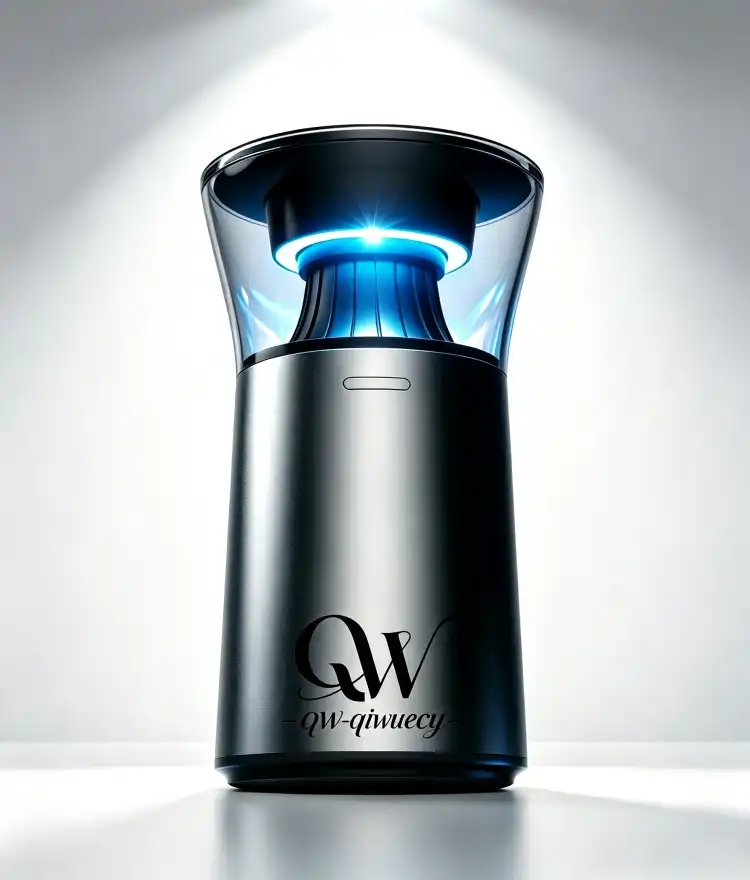
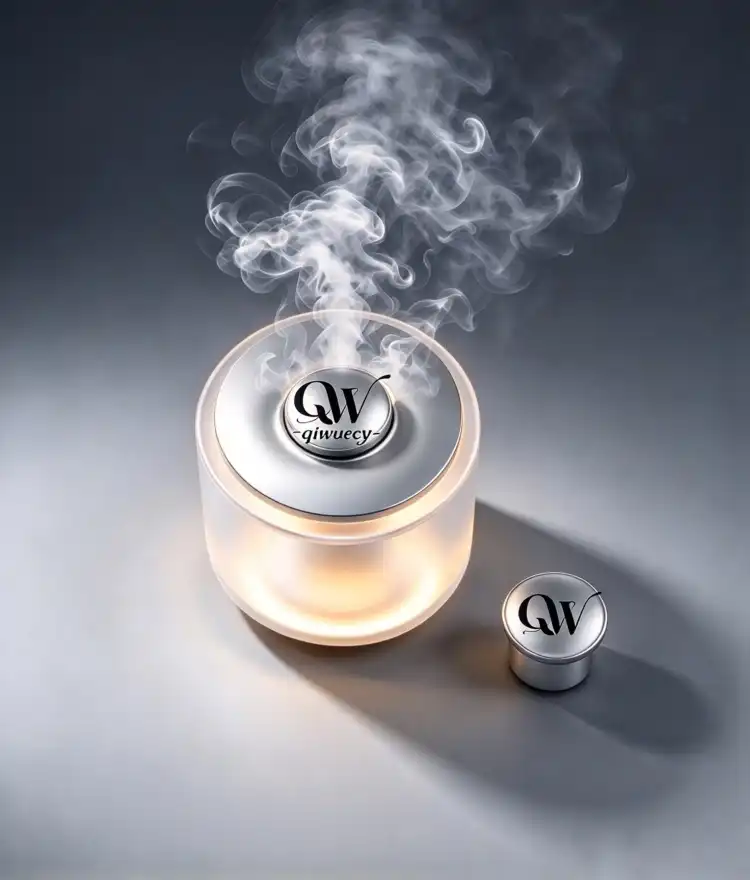
Qiwuecy’s Glass Waterless Aroma Diffuser is a direct entry point for understanding its home-product thinking. This product uses glass as the essential oil reservoir material, and the two-fluid atomization core is integrated into a structure that visually resembles a home fragrance object. It requires no water and no heating, and directly atomizes pure essential oil. For home cold aroma diffusers, the core contradiction lies in balancing “pure-oil atomization” with “low interference in daily use”: the air pump must provide enough pressure to drive the negative pressure at the Venturi throat, while operating noise must be controlled at a level acceptable for bedrooms and studies. Qiwuecy’s approach at this end is to integrate the atomization core with the reservoir and air path into a single package, so that atomization output does not drift significantly after several hours of continuous operation, rather than simply pursuing a momentary “maximum mist volume” [4].
Car Cold Aroma Diffusers: Small Size, Intermittent Operation, and Leak Prevention
The requirements of the car scenario for two-fluid atomization are almost reversed: the space is extremely small, and aroma concentration rises very quickly. If the device continuously outputs at full power, the olfactory receptors become saturated quickly, creating the wasteful feeling that “after a long time, the scent is no longer noticed.” Therefore, the structural focus of car cold aroma diffusers is not “large mist volume,” but small dosage, high-frequency intermittent operation, and physical leak prevention. Two-fluid atomization naturally does not rely on a water tank, so there is no risk of water leakage or water vapor condensation corroding the center console; the open outlet structure of the atomization core is less likely than fine orifices to change cross-section due to essential oil residue under vehicle vibration and temperature fluctuations. Qiwuecy’s atomization platform can provide compact core dimensions and programmable intermittent logic for car formats, allowing the aroma to maintain a stable yet restrained concentration at the breathing layer [3].
Commercial Cold Aroma Diffusers: Continuous Operation and Non-Drifting Output
Commercial cold aroma diffusers—hotel lobbies, retail stores, office floors, theaters—face a different order of problem: equipment needs to run continuously for long periods, and atomization volume must be reproducible, rather than “strong in the first week and weak in the third week.” Clogging and cross-section drift in two-fluid nozzles are the main failure modes in this scenario. Qiwuecy’s anti-oil-accumulation structure and annular air path design directly target this pain point: the open outlet reduces the retention of heavy essential oil components at critical cross-sections, and the annular flow guide reduces the disturbance of air pressure fluctuations on oil suction, keeping atomization output within a predictable range over long cycles. For commercial projects that require multiple devices to cover different zones, this output consistency is itself a prerequisite for system manageability [5].
What to Look for When Choosing a Two-Fluid Technology Solution for Your New Product
If you are evaluating a two-fluid atomization solution for a new cold aroma diffuser product, the following structural signals are more worth asking about than the nominal value of “maximum mist volume”:
Whether the air path is guided rather than direct-blow. A direct-blow Venturi tube is low-cost, but the gas–liquid mixing distance is short and atomization uniformity is limited. An annular or spiral flow-guide structure means a longer two-phase interaction time and higher predictability of output under different air pressures.
Whether the outlet structure makes an engineering trade-off between “fine” and “not clogging.” An extremely fine single orifice can produce beautiful laboratory SMD data, but in continuous operation with heavy essential oils, cross-section change is the primary cause of atomization drift. A more open outlet structure usually has an advantage in long-term stability, while SMD control should be achieved jointly through air pressure and gas–liquid ratio, rather than relying only on orifice diameter.
Whether the atomization core matches the operating rhythm of the target product. Home cold aroma diffusers need continuous stable output at low noise; car cold aroma diffusers need small-dose intermittent operation and compact size; commercial cold aroma diffusers need long-cycle anti-clogging. Under the same Venturi principle, the structural parameters in these three product types are not the same. A supplier capable of providing OEM/ODM two-fluid atomization technology services should be able to respond to these differences at the atomization-core level, rather than offering only one universal nozzle and asking the whole machine to accommodate it.
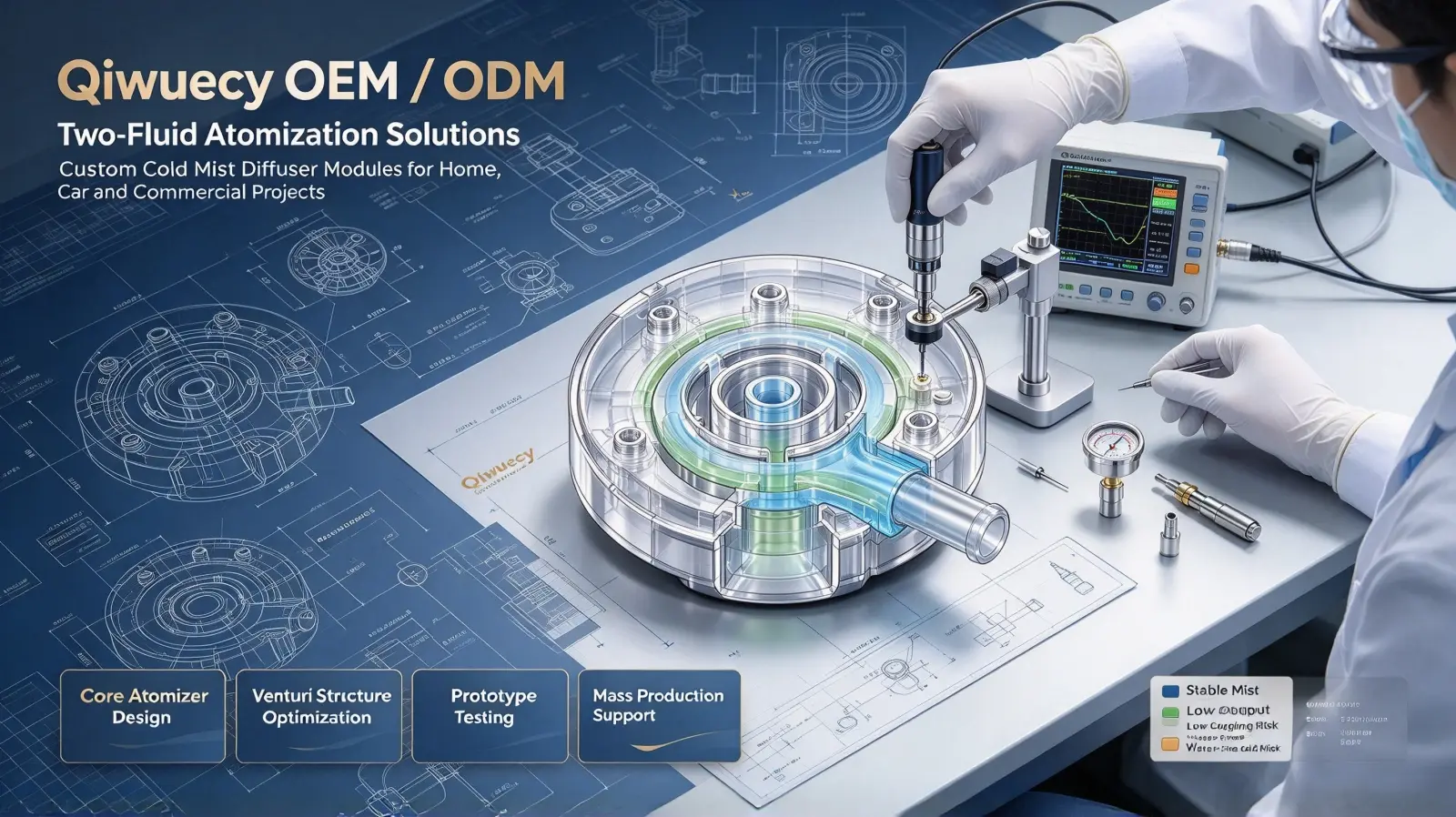
Qiwuecy has built product and engineering capabilities around two-fluid cold-mist atomization technology, covering an application spectrum from home cold aroma diffusers and car cold aroma diffusers to commercial cold aroma diffusers [6]. Its Glass Waterless Aroma Diffuser demonstrates a productization path for two-fluid atomization in a pure-oil, waterless, glass-reservoir format. More importantly, the value of the atomization core itself—its open structure, annular air path, and anti-oil-accumulation design—can provide a reusable technology foundation for whole-machine development across different categories. Qiwuecy also provides OEM and ODM two-fluid atomization technology services to brand customers: from atomization-core selection, air-path matching, and output tuning to whole-machine integration, it supports joint development at the product-definition stage and stable delivery at the mass-production stage. If you are planning a cold aroma diffuser product that requires “pure essential oil, uniform diffusion, and no long-term drift,” the structural choice of the two-fluid atomization core deserves serious attention at the solution stage.
References
-
Lu Daipeng, Tao Jianping, Wang Jue, Lü Xiaolan. Design and performance test of a two-phase flow atomization nozzle based on the Venturi effect. Jiangsu Agricultural Sciences, 2019(12). DOI: 10.15889/j.issn.1002-1302.2019.12.058.
-
Comparison of the principles of two-fluid and ultrasonic aroma diffusers. Xiaohongshu, 2025.
-
Technical parameters of a wireless diffuser for both home and car use. Qingteng Aroma, 2026.
-
Dr.Wong Gold and Fire cold aroma diffuser product page (two-fluid atomization; applicable scenarios: bedroom, office, bathroom).
-
Pure essential oil diffusion methods: two-fluid atomization (cold aroma diffuser). Xiaohongshu, 2025.
-
Business registration information of Shenzhen Qiwuecy Technology Co., Ltd. (Qiwuecy entity; business scope includes development and sales of electronic atomization equipment). Tianyancha.
Online Message
YOU MAY LIKE
High quality diffuser manufacturer