Aug 27, 2026
The Ultimate Procurement Guide to Car Waterless Aroma Diffusers for OEMs and Luxury Fleets
Introduction
The automotive accessory market is moving beyond basic air freshening toward controlled cabin experiences. Luxury vehicle owners, dealerships, and fleet operators now use fragrance as part of interior design rather than just odor masking. Research into sensory design and olfactory marketing confirms that scent shapes perceptions of vehicle quality and brand identity[1][5]. A Car Waterless Aroma Diffuser offers a water-free approach to controlled fragrance delivery in vehicle cabins.
This guide provides procurement teams with a practical, actionable checklist—covering technical specifications, supplier vetting, total ownership costs, and future-proofing strategies. We will not oversell; instead, we give you the direct questions to ask and the red flags to watch for when sourcing waterless diffusers for OEM projects, dealership programs, or aftermarket distribution.


Understanding Car Waterless Aroma Diffusers: Core Features
Technology & Operating Principles
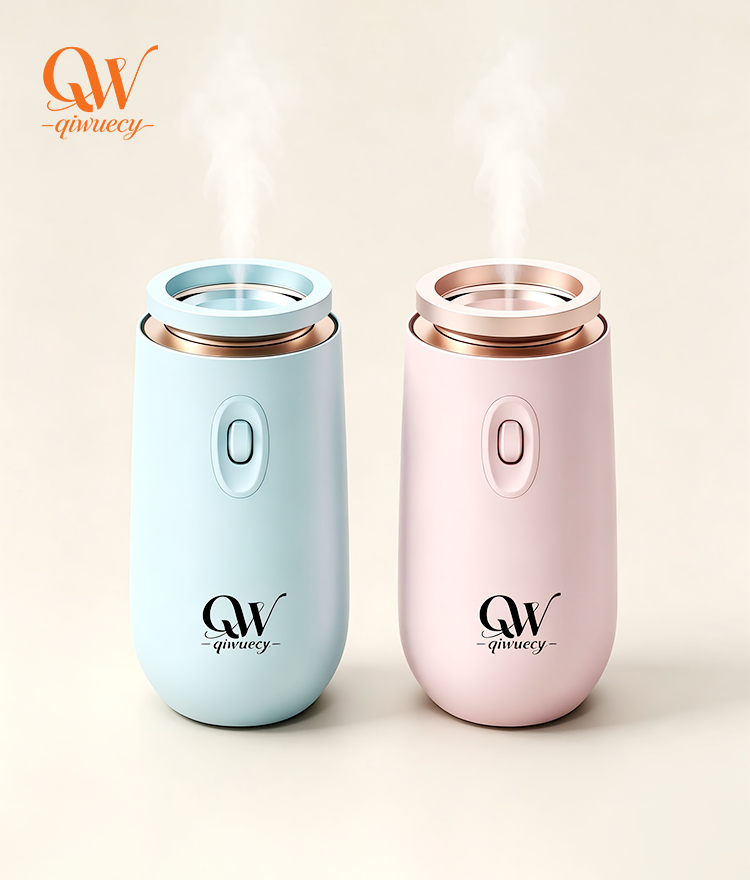
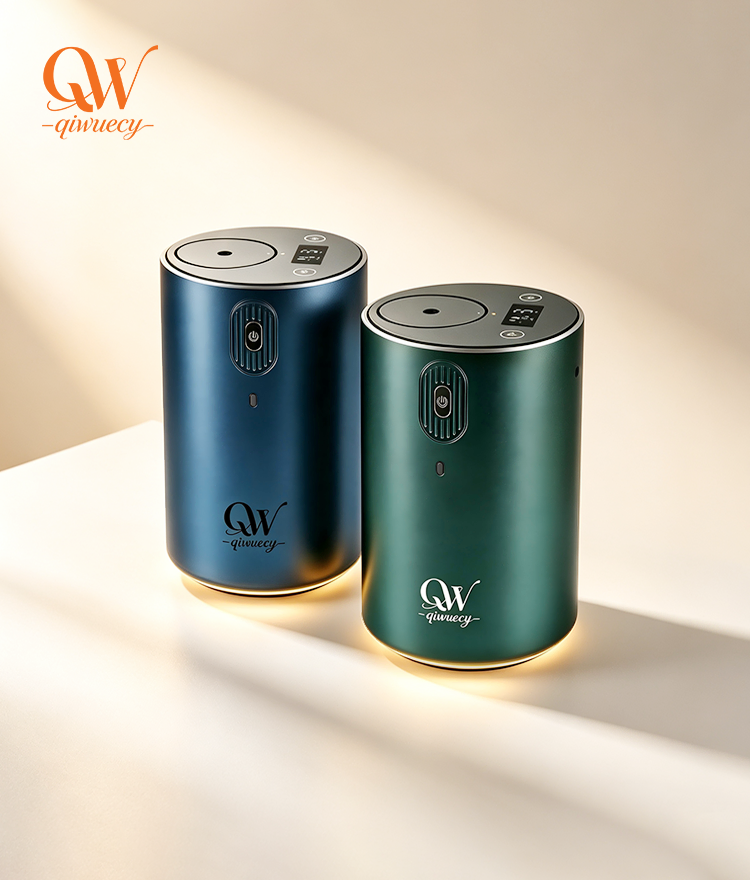
A waterless diffuser uses cold-air or air-assisted atomization to break fragrance liquid into fine particles, dispersing them without water. Unlike ultrasonic systems, this method delivers concentrated scent without adding cabin humidity[3][6].
Atomization methods vary—compressed air, miniature pumps, or Venturi designs. Each affects output differently. For procurement, do not fixate on particle size alone. Instead, evaluate these performance metrics under real vehicle conditions:
- Atomization consistency over 4+ hours of continuous use.
- Output variation across low/medium/high settings.
- Stability when the vehicle tilts or vibrates.
- Pump or airflow noise (typical range: 35–45 dB at 1 meter).
- Charging cycle durability (expect 300–500 full cycles before noticeable degradation).
- Ease of cleaning and fragrance replacement.
Key Advantages for Premium Vehicles
- Controlled delivery – Adjust cycles and intensity to maintain a consistent scent curve[3][5].
- No excess moisture – No water tank means less fogging on windows and less risk to dash electronics.
- Efficient fragrance use – Direct atomization avoids dilution. Average consumption: 0.3–1.2 ml/h at medium settings, depending on viscosity and nozzle type.
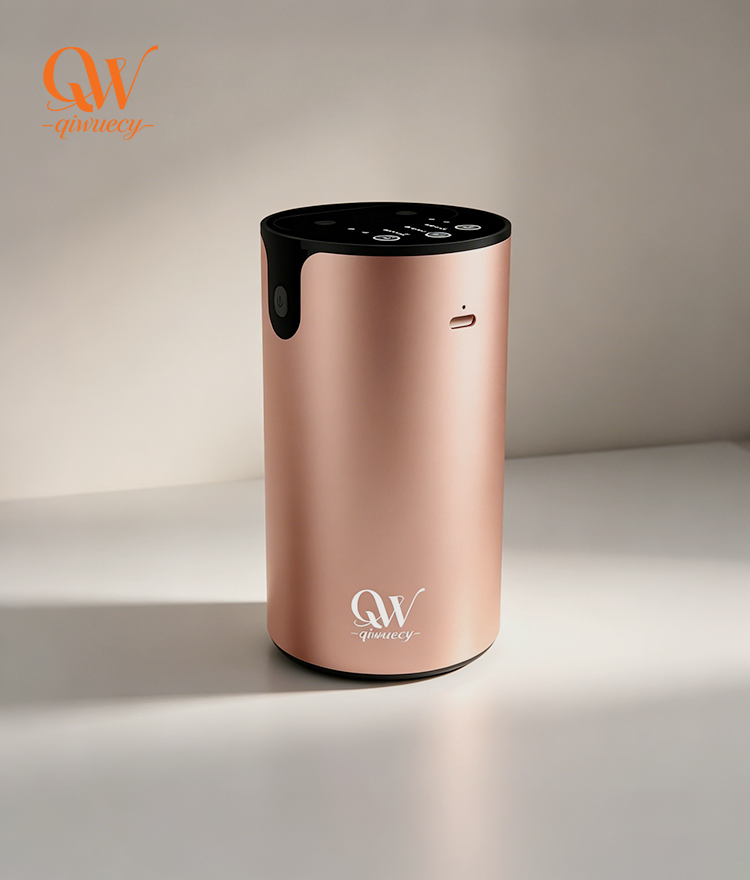
- Flexible installation – Battery-powered units (typical capacity: 1500–2500 mAh) can be placed anywhere without occupying a 12V socket.
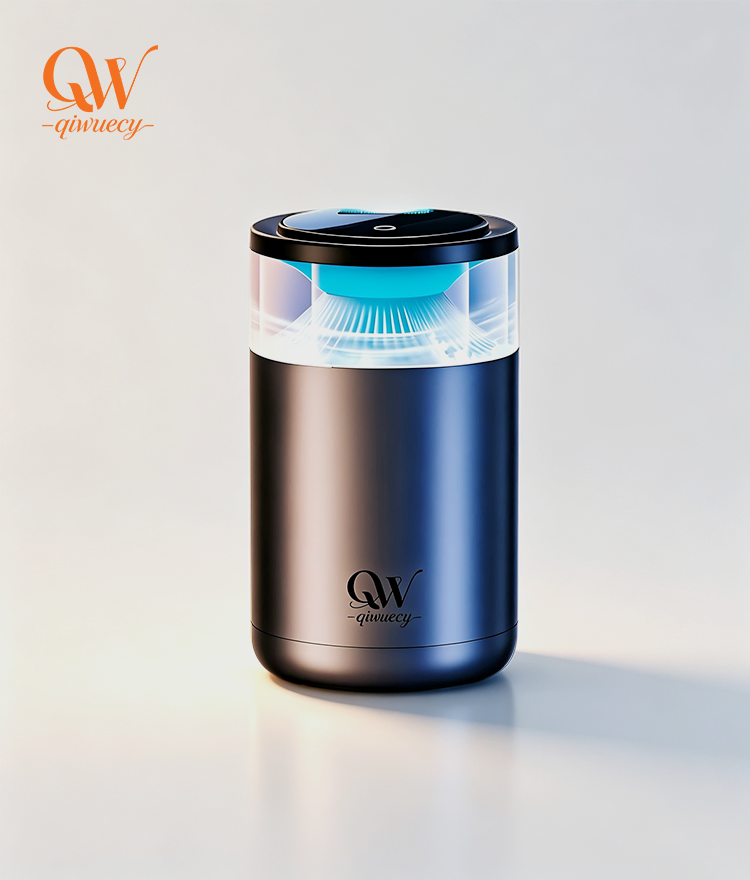
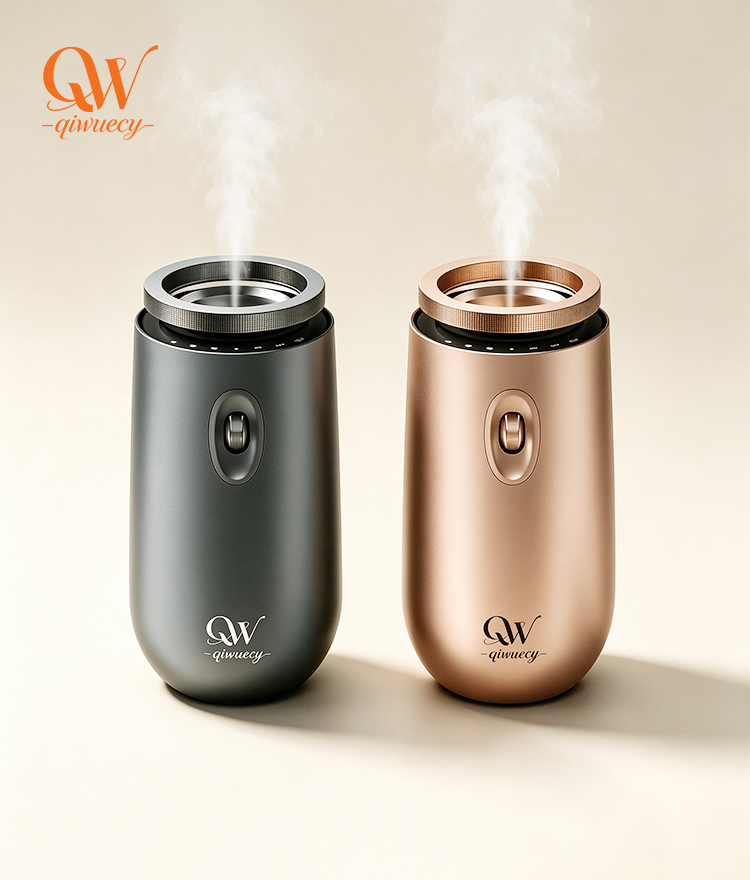
- Full customization – OEM buyers can customize housing colors, logos, fragrance blends, and packaging.

Waterless vs. Traditional Diffusers: A Data-Driven Comparison
As a core sub-category of Vehicle Aromatherapy Diffuser, waterless diffusers are compared with traditional products below. Traditional products include passive evaporative wicks, gels, and ultrasonic water-based units. Each has a place, but here is how waterless stacks up with typical performance ranges:
| Factor | Waterless Aroma Diffuser | Water-Based Ultrasonic |
|---|---|---|
| Fragrance medium | Pure oil or concentrate | Water + oil mixture |
| Water reservoir | Not required | Required |
| Moisture output | Negligible (RH increase <2%) | Moderate (RH increase 5–15%) |
| Effective scent concentration | Higher (direct atomization) | Diluted (water carrier) |
| Noise level (typical) | 30–45 dB (fan/pump) | 40–55 dB (vibration) |
| Refill frequency | Every 2–4 weeks (based on 10ml) | Every 1–2 weeks (water + oil) |
| Operating temp range | -10°C to 60°C (storage up to 70°C) | 5°C to 45°C (water freezing risk) |
Strategic Value for OEM & Aftermarket
Waterless technology enables product differentiation in a crowded market. Scent is now a sensory branding tool[5]. OEM/ODM services—fragrance formulation, custom molds, surface finishing—help brands stand out. Battery-powered designs simplify aftermarket installation across different vehicle models.
Pro Tip: Always test samples under your specific vehicle’s vibration and thermal conditions. Supplier data sheets are starting points, not guarantees.
Procurement Checklist: Technical Specs & Certifications
- When selecting a diffuser, look beyond dimensions and capacity. Use this criteria checklist:
- Vibration & Orientation Stability – Simulate tilted driving (up to 30° inclination) and rough roads.
- Temperature Tolerance – Request tested operating ranges. For global markets, ensure -10°C to 60°C operation and -20°C to 70°C storage.
- Noise Acceptance – For luxury cabins, insist on measured noise data. Target <40 dB at medium output.
- Battery Performance – Assess runtime per charge (varies by setting). Request cycle-life test reports (target >300 cycles to 80% capacity).
- Material Compatibility – Fragrance oils interact with plastics, seals, and tubing. Verify compatibility with your chosen formulation.
- Fragrance Consumption Rate – Ask for range data. Expect 0.3–1.2 ml/h depending on intensity.
- Coverage – Effective range depends on cabin volume (4–6 m³ for sedans, 6–10 m³ for SUVs). Test with cabin HVAC on low fan.
- Regulatory Documentation – Depending on the destination, request CE, RoHS, REACH, or FCC test reports[4].

Supplier Evaluation: A Practical Scoring Tool
Do not choose a supplier solely on unit price. Use this weighted scorecard (1–5 scale) to compare shortlisted vendors:
| Evaluation Category | Weight | Score (1-5) | Notes |
|---|---|---|---|
| Technical capability (R&D, atomization expertise) | 25% | Request patent or project case list | |
| Quality control system (in-process checks, testing equipment) | 20% | Ask for CPK data on critical dimensions | |
| Customization flexibility (mold, fragrance, packaging) | 20% | MOQ thresholds for changes | |
| Production capacity & lead time | 15% | Automated lines vs manual assembly | |
| After-sales support & warranty | 10% | Spare parts availability, response time | |
| Cost competitiveness (total landed cost) | 10% | Include logistics and tooling amortization |
Total Score: /100
>80 – Preferred partner.
60–80 – Conditional approval, require improvement plan.
<60 – Reconsider.
For customized projects, also review confidentiality agreements, mold ownership, and repeat-order stability.
Installation & Maintenance Best Practices
Placement:
Position the diffuser where airflow is open but not directly blasted by A/C vents. Avoid enclosed compartments. For battery units, match timer cycles to actual driving patterns (e.g., 10 min on / 20 min off for city commutes).
Maintenance:
- Clean the atomization tip every 2–4 weeks using the manufacturer’s recommended solution.
- Inspect seals and connection points monthly for residue or leakage.
- Store and charge batteries per guidelines—avoid extreme heat (>45°C) to prolong life.
- Critical: Always test your final fragrance formulation with the diffuser’s internal materials (seals, tubing, nozzles) before mass production. Incompatible oils can degrade components within weeks.

Future Trends: Smart Integration & Sustainability – Implications for Buyers
Smart Connectivity
Future versions of the car cold mist diffuser will integrate with vehicle apps and voice assistants. Potential functions include intensity scheduling, scent selection per driver profile, and cabin air quality feedback.
Implication for buyers: If your project cycle exceeds 2 years, prioritize models that support Bluetooth or OTA (over-the-air) firmware upgrades to reserve smart integration capacity. This avoids hardware obsolescence before your product launch.
Sustainable Materials & Refillables
Recyclable metals, low-impact plastics, and refillable cartridges are gaining traction. Natural fragrance ingredients are also in demand among premium consumers.
Implication for buyers: For European or eco-conscious markets, request material recyclability certificates and ingredient traceability documentation early in the sourcing phase.
Common Procurement Pitfalls to Avoid (New Section)
Avoid these frequent mistakes made by procurement teams:
- Ignoring tilt/vibration tests – A diffuser that works perfectly on a bench may leak or stop atomizing when the car goes over speed bumps. Always demand dynamic testing data.
- Overlooking temperature extremes – Cabin temperatures can hit 70°C in summer. Seals and batteries that fail at high heat will cause returns. Verify storage and operation ranges.
- Assuming universal oil compatibility – Not all essential oils are safe. Citrus oils, for example, can degrade certain plastics. Validate your specific blend with the supplier’s material list.
- Focusing only on unit price – A cheaper unit with a 1-year lifespan and no spare parts may cost more over 3 years than a durable unit with a 2-year warranty and available consumables.
Conclusion
Car Waterless Aroma Diffuser offers a practical, moisture-free approach to automotive scenting. Suitability depends on more than atomization tech—fragrance compatibility, output consistency, noise, battery durability, installation, maintenance, materials, and supplier capability all matter.
For procurement professionals, compare products against your actual vehicle environment. Standard aftermarket models emphasize compact design; OEM projects often demand custom molds, fragrances, and packaging.

Partner with Qiwuecy – Proven Excellence
Qiwuecy specializes in atomization technology with over a decade of experience and multiple automated production lines. Our solutions serve automotive, home, and commercial sectors, with the Car Waterless Aroma Diffuser as our core automotive product.
Client Case 1: A European luxury sedan brand partnered with us to develop a custom fragrance delivery system for their new EV line. We co-developed a unique mold, low-noise atomizer (<38 dB), and proprietary scent profile, resulting in a 40% reduction in customer complaints about cabin odor within 6 months.
Client Case 2: An Asian regional dealership network adopted our QW30 private-label diffuser as a premium gift for new car buyers. With our flexible MOQ (starting at 100pcs for initial trial) and rapid packaging customization, they scaled to 5,000 units annually, boosting their customer satisfaction scores by 18%.
For bulk purchasing, OEM development, or private-label projects, Contact Us at marketing@qiwuecy.com to discuss samples, customization, and production scheduling.
References
1. Anderson, M. & Chen, L. (2022). Automotive Interior Sensory Design: Trends in Premium Vehicle Customization. Journal of Automotive Engineering and Technology, 17(3), 45–62.
2. Global Market Insights. (2023). Car Air Freshener Market Report: Technology Analysis and Forecast 2023–2030. Industry Research Publications.
3. Roberts, J. (2021). Essential Oil Atomization Technologies: Comparative Performance in Mobile Environments. International Journal of Fragrance Science, 8(2), 112–128.
4. Society of Automotive Engineers. (2023). SAE Standards for Automotive Accessory Certification and Safety Testing. SAE International Technical Papers.
5. Williams, K. & Zhang, H. (2022). Luxury Automotive Brand Differentiation Through Olfactory Marketing. Business Strategy Review, 29(4), 78–94.
6. Zhou, T. (2023). Compressed Air Diffusion Systems: Engineering Principles and Automotive Applications. Mechanical Engineering Advances, 12(1), 33–51.
Online Message