Nov 3, 2026
Tea Tree Essential Oil for B2B: Terpinen-4-ol Standards, Certification & Skincare Applications
On a business level, sourcing tea tree single Essential Oil is less about identifying a provider and more about verifying the appropriate figures on a certificate of analysis. Buyers of acne treatments, scalp serums, or plant-based cleaning products need a single tea tree essential oil that fulfills a certain terpinen-4-ol limit, has the export compliance documentation required, and comes in packaging suitable for their line. This tutorial takes you through what to look for before signing a purchase order, what documents to ask for, and how batch size and logistics usually go when you are purchasing tea tree oil for a completed product, not for personal use.


Procurement Quick View
Executive summary:
- Terpinen-4-ol content around 35% or higher is the benchmark most formulators reference for a genuine tea tree single essential oil.
- REACH registration, an IFRA-aligned Certificate of Conformity, and a batch-specific GC-MS report are the documents buyers ask for most often.
- Application concentration varies by product type — no single "safe" percentage applies across acne care, scalp treatments, and cleaning formulations.
- Order volumes typically scale from small trial quantities up to bulk drums, with packaging format shifting as volume increases.
- Lead time and sample turnaround depend on whether the batch is in stock or needs fresh distillation scheduling.
| Checklist Item | What to Confirm |
|---|---|
| Certifications | ISO 4730 reference standard, GMP-aligned production, REACH-registered status |
| Minimum Order Quantity | Starts at small trial volumes (10ml–1kg range for testing), scaling to bulk drums |
| Lead Time | Varies by stock availability and current distillation schedule |
| Sample Policy | Small-volume samples generally available before committing to a bulk order |
| Application Scenarios | Acne/blemish formulas, scalp and dandruff care, household and industrial cleaning blends |
The Terpinen-4-ol Standard: What B2B Buyers Need to Verify First
Why Terpinen-4-ol Content Determines Purchasing Decisions
Terpinen-4-ol is the chemical most associated with the qualities that make tea tree oil beneficial in cosmetics and cleaning formulas, and it’s the first quantity formulators check. In general, the compositional values outlined in the ISO 4730 reference standard would suggest that a commercial formulation-grade tea tree single essential oil should test at about 35% or higher. Oil that falls much below this range may still be called “tea tree oil,” but it will not work reliably in a final recipe. When comparing bids, if you ask for the terpinen-4-ol number for each batch available (rather than an average value), you have a clearer foundation for comparison than simply pricing.[1]
Reading a Tea Tree Single Essential Oil COA Correctly
A Certificate of Analysis should provide the percentage of each individual component, not simply a pass/fail declaration. For a single tea tree essential oil, the COA generally identifies terpinen-4-ol, gamma-terpinene, alpha-terpinene, and 1,8-cineole, as well as physical properties such as specific gravity and optical rotation. First-time sourcing buyers may occasionally accept a COA that just shows terpinen-4-ol, making it more difficult to detect a diluted batch. Is the COA batch particular or is it a "typical" reference document? Only the former is representative of the exact drum you will get.
Terpinen-4-ol vs 1,8-Cineole: The Ratio That Matters
The 1,8-cineole content is as important as the limit of terpinen-4-ol for formulation stability. Generally, the higher the cineole level, the more pungent and medicinal the perfume. For skin-contact goods, the cineole content is usually maintained toward the bottom of the acceptable range in oil. An exceptionally high cineole result for the terpinen-4-ol content of a tea tree single essential oil may suggest a new chemotype that is worth reporting to the supplier. This ratio is one of the fastest sanity checks of a COA before a big order.
Common Testing Methods Suppliers Use
Most reputable manufacturers use gas chromatography with mass spectrometry (GC-MS) to create the composition breakdown, occasionally complemented by GC-FID for regular screening. Export-quality tea tree essential oil should be tested either in-house with documented calibration or outsourced to a third-party lab. Buyers may inquire which procedure was utilized. For bigger contracts, some require an independent third-party retest before the whole payment is released.
| Standard Reference | Typical Focus | Relevance to Buyers |
|---|---|---|
| ISO 4730 | Compositional range for oil of Melaleuca, terpinen-4-ol type | Baseline for comparing terpinen-4-ol and cineole figures across suppliers |
| GC-MS Batch Report | Full compound breakdown for a specific production lot | Confirms the actual batch matches claimed specifications |
| Physical Parameters (specific gravity, optical rotation) | Secondary quality indicators | Helps flag dilution or adulteration alongside compound data |

Certification & Compliance Documents for EU/US Export
REACH Registration and Why It's Non-Negotiable for EU Buyers
If your end product will be sold in the European market, REACH registration status on the raw tea tree single essential oil is not optional paperwork — it’s a condition for customs clearance and retail listing in most circumstances. However, it is worth noting that while registration is mandatory for EU importers exceeding 1 tonne per year, buyers importing smaller quantities are exempt from the registration process but must still ensure SDS and CLP compliance. Suppliers exporting into the EU should be able to validate the registration number for the substance or confirm how the oil is protected under current REACH requirements. Sometimes buyers believe that any international supplier would automatically have this covered, but it’s worth clarifying immediately rather than finding out there’s a gap after the items are already en route.[2]
IFRA 51st Amendment Compliance for Skincare Formulations
The International Fragrance Association has established guidelines that are now included in the 51st Amendment. These standards establish use restrictions that fragrance and cosmetic formulators apply when creating a final skincare product. Technically, the standard applies to the final compound, not only to the raw material. However, a provider of tea tree single essential oil for cosmetic application should be able to offer a Certificate of Conformity with reference to current IFRA requirements. Specifically, the IFRA 51st Amendment mandates a strict purity specification for tea tree oil, requiring ascaridole content to be below 1%. Additionally, because maximum concentration limits for leave-on skin applications vary by product category, buyers should request an IFRA Conformity Certificate tailored specifically to their intended end-use, rather than accepting a generic 'IFRA-aligned' claim. This document is mainly applicable when your formulation team or a downstream retail partner does their own compliance evaluation.[3]
GC-MS Reports: What to Request Before Placing an Order
Some purchasers (especially if it’s a bigger contract, or the product will end up in a regulated market) want a complete GC-MS chromatogram, not simply the summarized chemical table, in addition to the normal COA. This provides a point of comparison for your internal QA team for subsequent batches, and establishes a written baseline. If you are a tea tree single essential oil provider who is used to export-focused B2B customers, you should be providing this without much back and forth. A supplier that opposes giving thorough testing data is typically worth addressing as a danger signal.
ISO and GMP Certifications for Manufacturing Traceability
ISO 9001 certification is a general statement about the supplier’s quality management system, whereas manufacturing according to GMP is especially relevant when the oil is intended for cosmetic use. And batch numbers, harvest location, and date of distillation make up traceability records that complete the picture, and are the most important if an audit or complaint needs tracking a product back to its raw material source. It is a reasonable and telling inquiry to ask right away how far back a supplier’s batch records go.[4]

Formulation Applications: Acne, Scalp Care & Cleaning Products
Recommended Concentration Ranges for Acne-Targeted Formulas
In leave-on facial or spot-treatment formulations, tea tree single essential oil is generally used at a fairly low overall concentration relative to the total formula, with the exact figure depending on the rest of the ingredient list, contact time, and the target market's regulatory guidance. Formulators typically start toward the conservative end of the workable range and adjust based on stability and sensory testing rather than jumping to a maximum figure. Because usage guidance shifts by region and product category, it's worth treating any concentration figure as a starting reference point and confirming current guidance with a formulation chemist.
Scalp Care and Anti-Dandruff Product Considerations
Scalp-focused formulations — shampoos, tonics, leave-in treatments — are among the more common commercial uses for tea tree single essential oil, often paired with other actives aimed at flake or oil control. Rinse-off products generally tolerate a somewhat higher inclusion rate than leave-on facial products because contact time with the skin is much shorter. Buyers formulating in this category often request a consistent aroma profile batch to batch, since scalp products tend to have a loyal repeat-purchase customer base that notices small sensory shifts between production runs.
Tea Tree Oil in Household and Industrial Cleaning Blends
Outside personal care, tea tree single essential oil shows up frequently in plant-based household and light industrial cleaning products, valued for both aroma and its established use history in this category. Cleaning formulations typically allow for a broader concentration range than skin-contact products, since exposure and contact time differ, though ventilation and surface-compatibility testing still matter during development. Buyers in this segment often prioritize consistent aroma intensity and bulk packaging over the tightest possible terpinen-4-ol specification, though most still keep a minimum threshold in their purchasing spec.
Blending Compatibility with Other Essential Oils
Tea tree single essential oil blends reasonably well with a range of complementary oils commonly used in skincare and cleaning formulations, including lavender, eucalyptus, and various citrus oils, which formulators often use to soften its naturally sharp aroma profile. Compatibility testing during development typically looks at both scent balance and any interaction effects on product stability over time. Buyers developing a new blended product sometimes request a small trial batch to test how the tea tree component behaves alongside their other planned ingredients before a full production run.
| Application Category | Typical Contact Time | Formulation Note |
|---|---|---|
| Acne/spot treatment (leave-on) | Extended | Conservative concentration; sensory and stability testing recommended |
| Scalp care (rinse-off) | Short | Generally tolerates a somewhat higher inclusion rate |
| Household/industrial cleaning | Variable, often no skin contact | Broader concentration range; aroma consistency prioritized |
Procurement Practicalities: Packaging, MOQ & Logistics
Batch Sizes from Small-Volume Trial Orders to Bulk Supply
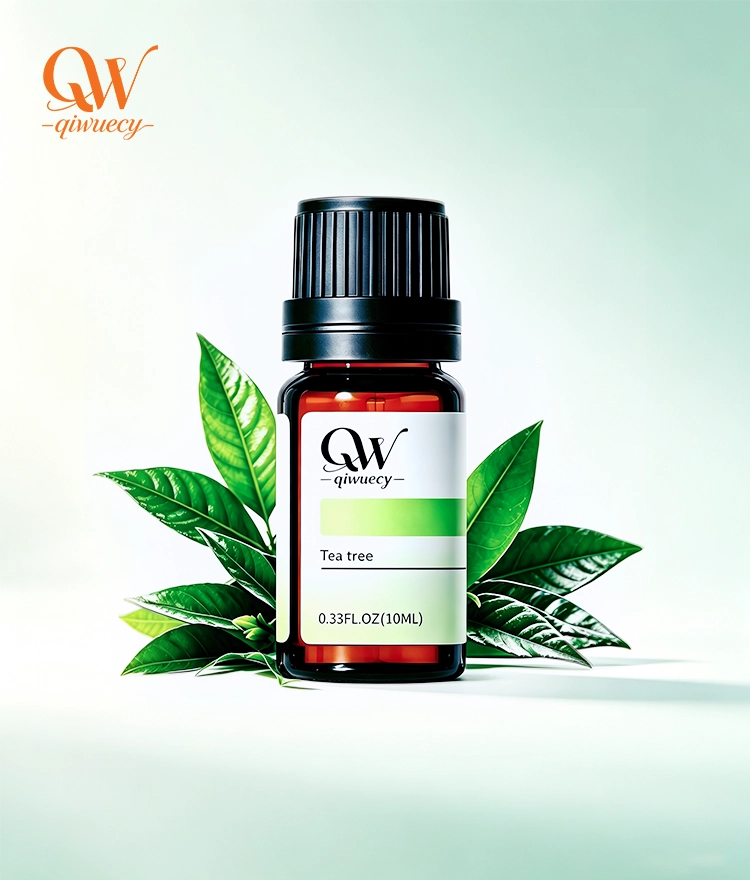
Most producers selling tea tree single essential oil to B2B customers are providing a variety of order sizes, from tiny trial amounts (typically in the order of 10ml for lab-scale testing) through to kilogram-level purchases and up to bulk drum volumes. Starting with a modest trial order allows your formulation and QA teams to check that the oil works as intended before committing to a bigger order. Export buyers who are familiar with suppliers know this tiered strategy and won’t push new clients into a big initial purchase.
Standard Packaging Formats and Why 25L Drums Matter
The 25-liter drum is a frequent industry-standard package size for buyers who purchase beyond trial volumes, in part because it balances the weight of handling with shipping efficiency. Some providers also provide intermediate container sizes for customers who are between trial and full-drum scale. The packing material (usually aluminum or coated steel drums) is important to check in advance, as it might impact product stability in transport and customs clearance at the receiving end.
Hazmat Labeling and Shipping Documentation
Essential oils are often classified under dangerous goods regulations for both ocean and air freight due to their flashpoint and flammability characteristics. Specifically, tea tree oil is typically assigned to UN 1169 (Extracts, aromatic, liquid) or UN 2319 (Terpene hydrocarbons, n.o.s.), and is regulated as a Class 3 flammable liquid, Packing Group III, with a flashpoint of approximately 54–59°C. Shipments generally require proper UN classification labeling and a Material Safety Data Sheet (MSDS) accompanying the paperwork. Buyers should establish early with their supplier and freight forwarder whether this classification applies to their specific cargo mode and destination, since the standards vary between air and marine freight. Work this out before the goods leave port and you’ll avoid the type of customs wait that costs considerably more than the additional preparation time..
Sample Policy and Lead Time Expectations
In this sector, it is common practice to request a sample before committing to a large purchase. Most experienced suppliers of tea tree single essential oil can handle a modest sample shipment within a relatively rapid turnaround. Lead time on the complete order varies depending on whether the required batch is in stock now or requires scheduling against an impending distillation run, therefore best to inquire directly rather than assume a set timetable. As a general rule, it’s best to build in a little cushion between your sample review and the production date.

Testing Indicators to Confirm Before You Purchase
Rather than treating tea tree oil sourcing as a single price comparison, it helps to run through a short checklist before finalizing any purchase order.
| # | Testing Indicator | Why It Matters |
|---|---|---|
| 1 | Terpinen-4-ol percentage | Primary benchmark for a genuine, formulation-grade tea tree single essential oil |
| 2 | 1,8-cineole level | Secondary indicator that helps confirm chemotype and formulation suitability |
| 3 | Botanical species verification (Melaleuca alternifolia) | Confirms the oil is sourced from the correct species rather than a related but different plant |
| 4 | Batch-specific COA vs. typical/reference COA | Ensures the documentation reflects the actual drum being shipped |
| 5 | Batch-to-batch consistency history | Signals whether a supplier can reliably repeat specifications across repeat orders |
Working through these five points with a prospective supplier before placing a purchase order tends to surface red flags early and gives your team a documented basis for the sourcing decision.
Confirm the COA states Melaleuca alternifolia specifically, not Melaleuca linarifolia or a generic ‘Melaleuca oil’.
Conclusion
When sourcing tea tree single essential oil for a commercial formulation, a few things come to mind a terpinen-4-ol figure close to the recognized industry benchmark, documentation that matches your export market’s compliance expectations, and a supplier who can discuss packaging and logistics without hesitation. Buyers who validate these points before the initial order prefer to avoid the delays and revisions that arise from finding a gap later. If you are already screening vendors for a future project, acquiring a batch-specific COA and a small trial sample is a logical next step and worth considering now.
FAQ
Q: What terpinen-4-ol percentage should I look for in a tea tree single essential oil intended for cosmetic formulation?
A: Most formulators reference roughly 35% or higher, per the ISO 4730 range, though it's worth reviewing the full COA rather than relying on this figure alone.
Q: Do I need REACH registration confirmation even if I'm only buying a small trial quantity?
A: It's worth confirming REACH status regardless of order size, since the same raw material needs that coverage once your product scales toward EU distribution.
Q: How do I know if a supplier's GC-MS report is trustworthy?
A: Ask whether the report is batch-specific, request the testing method used, and consider an independent third-party retest before committing to a large order.
Q: What's a reasonable first order size when testing a new tea tree oil supplier?
A: Starting with a small trial quantity, often around 10ml for initial lab testing before scaling into kilogram-level orders, lets your team validate quality before a larger commitment.
Source Tea Tree Single Essential Oil with Qiwu
Qiwu Technology brings over a decade of atomization and tea tree single essential oil manufacturing experience to B2B buyers who need dependable specifications, batch-level documentation, and packaging that fits a real production line. Whether you're evaluating a first trial sample or planning a larger formulation run, our team can walk through terpinen-4-ol figures, compliance documentation, and batch sizes with you directly. Reach out to marketing@qiwuecy.com to request a sample or discuss your project's specification requirements — we're glad to help you source with confidence.
References
1. International Organization for Standardization. ISO 4730 — Oil of Melaleuca, terpinen-4-ol type (tea tree oil).
2. European Chemicals Agency (ECHA). REACH Regulation (EC) No 1907/2006 guidance for cosmetic and fragrance raw materials.
3. International Fragrance Association (IFRA). IFRA Standards, 51st Amendment.
4. Cosmetic Ingredient Review (CIR) Expert Panel. Safety assessment publications on Melaleuca alternifolia (tea tree) leaf oil.
Online Message