Sep 11, 2026
Why Is Your Aroma Diffuser So Noisy? Unlocking the Secrets of a Quiet Waterless Aroma Diffuser
Struggling with a noisy diffuser? Discover how an internal vibration damping structure reduces air pump noise. We break down the engineering secrets behind the QW053 Smart Waterless Aroma Diffuser. An essential guide for OEM buyers.
Table of Contents
-
Introduction: The Noise Problem That Ruins the Experience
-
The Root Cause of Diffuser Noise: Why the Air Pump Is the Main Culprit
-
Structural Innovation: Mastering the Internal Vibration Damping Structure
-
3.1 The Core Barrier: Strategic Damping Layer
-
3.2 Clamping Assembly & Pump Fixing Bracket: Secure Yet Flexible
-
3.3 Modular Installation: Maintenance Advantage for B2B Buyers
-
3.4 Advanced Noise Reduction: From “Damping” to “Soundproofing”
-
-
Product Spotlight: The QW053 Smart Waterless Aroma Diffuser
-
Commercial Value for B2B & OEM Waterless Aroma Diffuser Buyers
-
Buyer’s Guide: How to Choose a Quiet Diffuser
-
Frequently Asked Questions (FAQ)
-
Conclusion & Next Steps
-
References
<a id="introduction"></a>
1. Introduction: The Noise Problem That Ruins the Experience
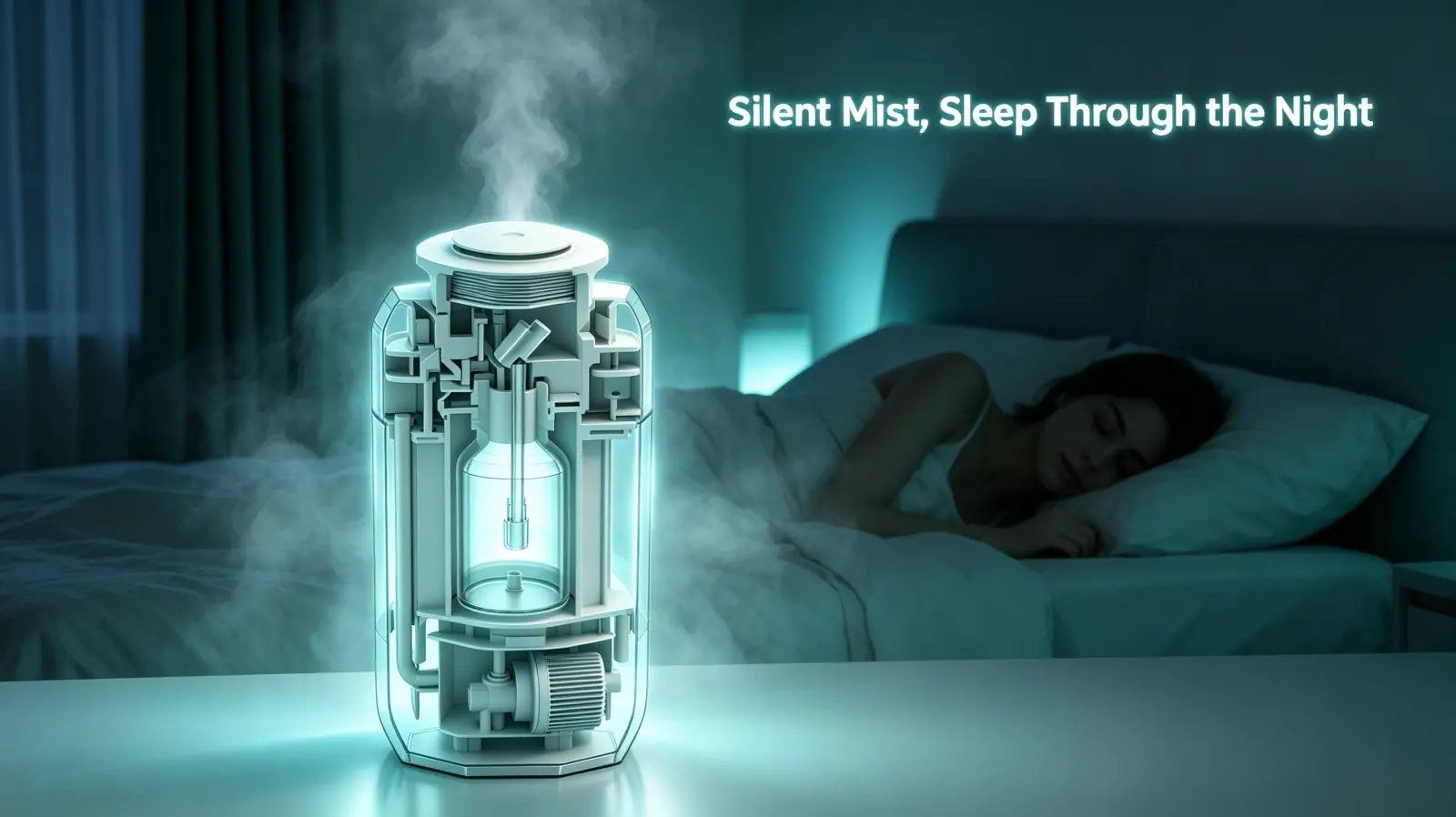
When you are winding down for sleep or focusing at your desk, turning on an aroma diffuser should bring a sense of relaxation. Instead, many users are met with an irritating, continuous “buzzing” sound. This not only ruins the atmosphere but often forces users to turn the device off completely.
As an experienced manufacturer in the aroma diffusion industry, we frequently hear this complaint from our clients. Many B2B buyers focus solely on the “decibel number” listed on a spec sheet, overlooking a fundamental truth: Noise is a physical vibration. Today, we are going to take a deep dive into the internal structure of Diffusers to reveal how to engineer a truly quiet waterless aroma diffuser.
<a id="root-cause"></a>
2. The Root Cause of Diffuser Noise: Why the Air Pump Is the Main Culprit
Most modern misting diffusers rely on a built-in air pump to deliver pressurized air to the atomizing head, breaking Essential Oil into micro-particles. However, during operation, the motor’s rotation and the piston’s reciprocating motion generate intense, high-frequency physical vibrations.
In traditional, low-cost designs, the air pump is usually screwed directly onto the outer shell or the internal frame. This rigid connection acts like “welding” the vibration directly onto the machine. The pump’s vibration is ruthlessly transmitted to the entire housing, which then acts like a drumhead, amplifying and radiating the noise. This is why many diffusers sound like small generators.
Industry data shows that the noise level of traditional air pump nebulizing diffusers hovers around 44–46 dB [1][3]. In quiet environments like bedrooms or SPA rooms, this is easily noticeable. However, with systematic vibration damping design, this level can be reduced to 35 dB or lower, achieving a near-silent experience [6].
<a id="structural-innovation"></a>
3. Structural Innovation: Mastering the Internal Vibration Damping Structure
To solve the noise problem, simply buying a more expensive pump is a temporary fix. The real solution lies in cutting off the transmission path of vibration. Our patented design achieves this through three key structural innovations, forming the core of a quiet waterless aroma diffuser.
<a id="damping-layer"></a>
3.1 The Core Barrier: Strategic Damping Layer
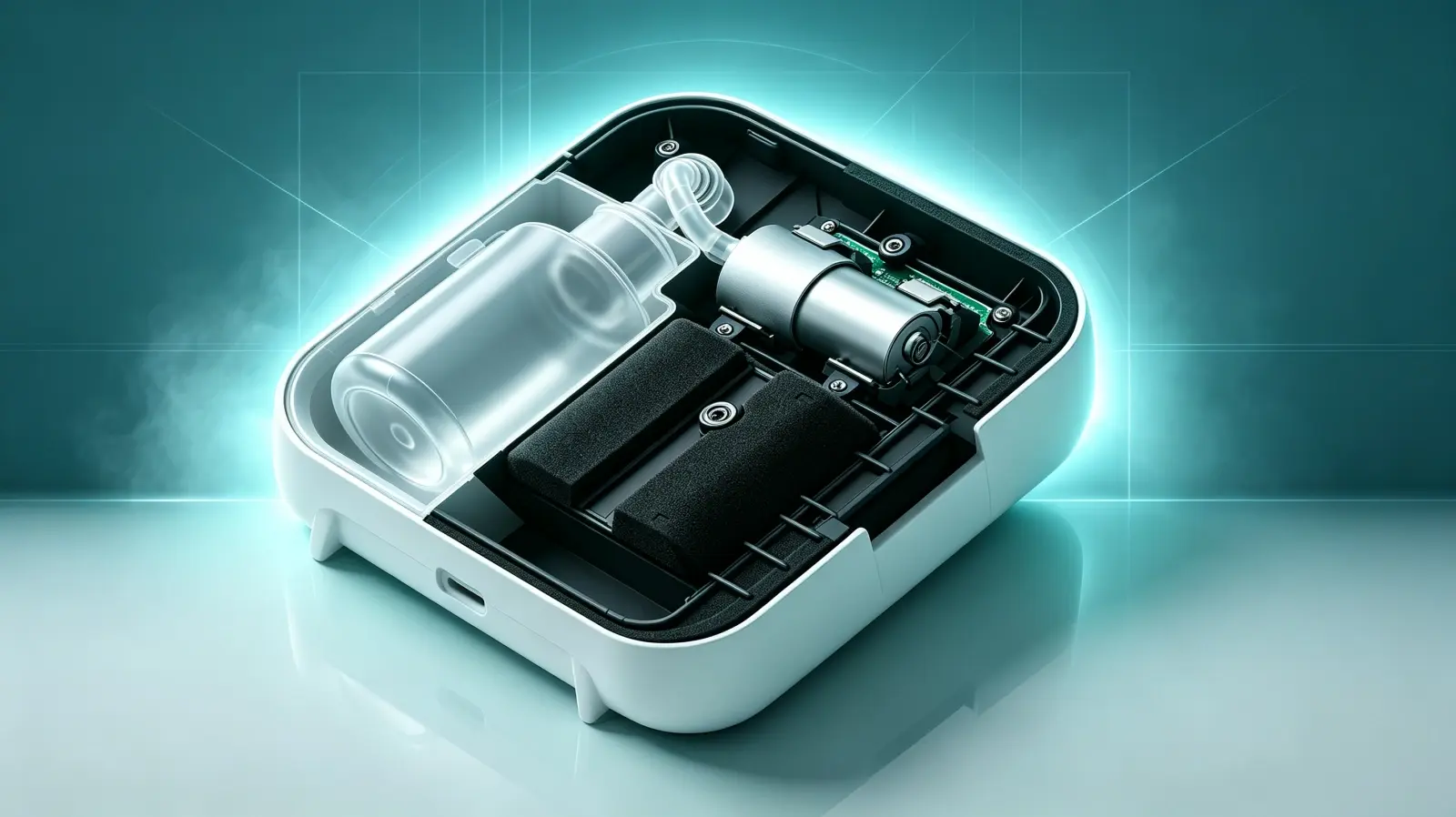
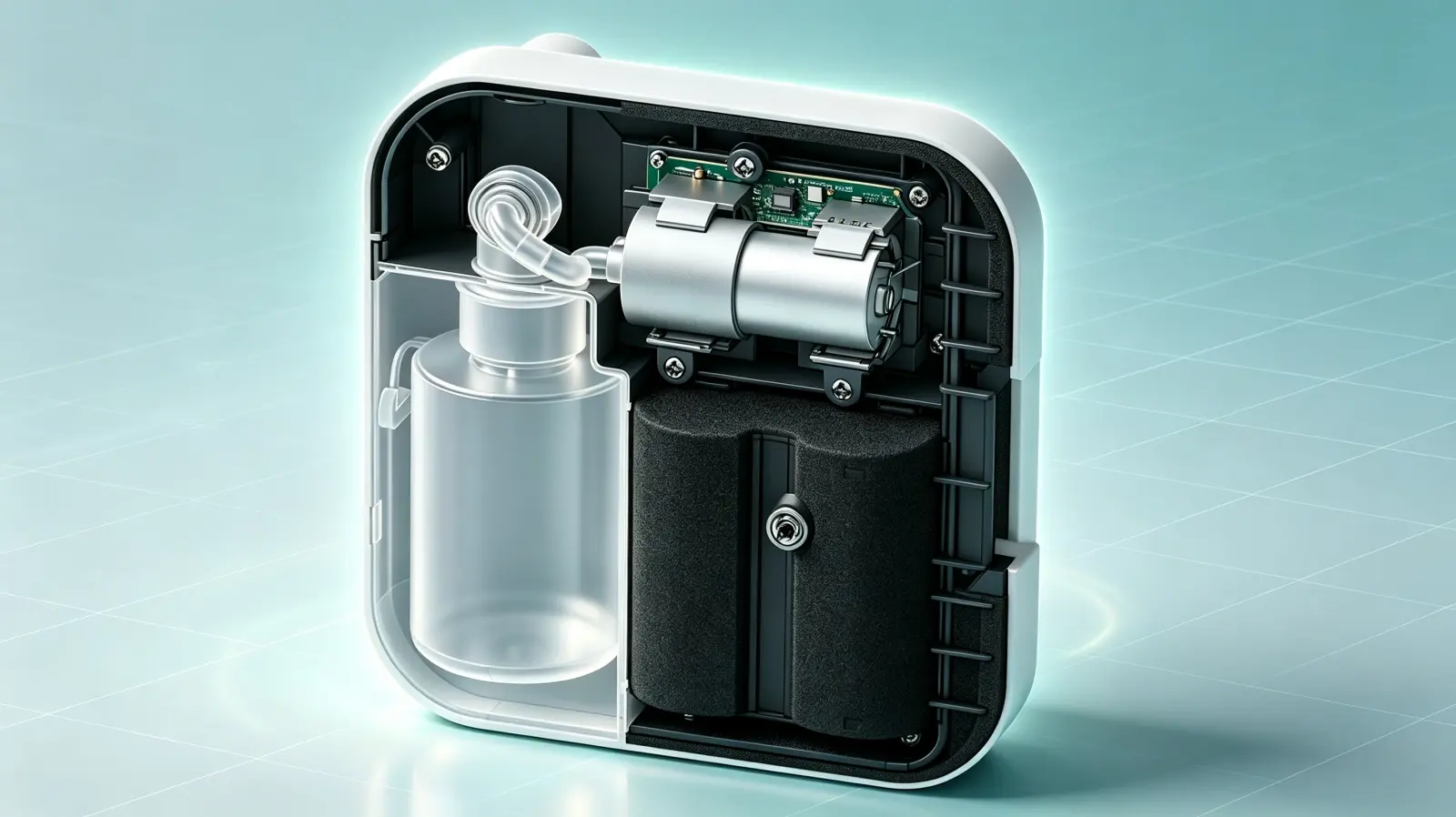
This is the first and most effective line of defense. We wrap a damping layer (typically made of high-damping rubber or silicone) around the perimeter of the air pump.
This layer acts like a physical “soundproof shield.” When the pump vibrates, the damping layer absorbs and buffers the vibration in both radial and axial directions. It effectively intercepts the vibration before it can travel to the mounting base and the outer shell, drastically reducing the overall noise level. The shock-absorbing pad covers the outer wall of the air pump and abuts against the inner wall of the mounting base, achieving full coverage and ensuring that the aroma diffuser maintains a low noise level during operation [6].
<a id="clamping-assembly"></a>
3.2 Clamping Assembly & Pump Fixing Bracket: Secure Yet Flexible
Having a damping layer is one thing; securing it properly is another. If not fixed firmly, the pump will wobble inside the damping layer, creating secondary noise.
We designed a detachable air pump fixing bracket paired with a clamping assembly. The pump is precisely clamped onto the bracket, with the damping layer sandwiched exactly between the clamping assembly and the pump. This ensures the pump doesn’t shift during operation, while avoiding any direct hard contact between the bracket and the pump.
Furthermore, an oil-resistant rubber O-ring is fitted onto the connection between the air guide and the pump. Under insertion force, the O-ring is moderately compressed, forming a 360° tight sealing interface with the end faces of both components. This structure not only achieves an airtight connection but also effectively isolates vibration transmission, improving the durability of the connection and overall atomization efficiency.
<a id="modular-installation"></a>
3.3 Modular Installation: Maintenance Advantage for B2B Buyers
For B2B clients (brands and assembly factories), this detachable bracket design offers a massive advantage: Ease of Maintenance [4]. Traditional pumps are difficult to repair or replace. Our modular design makes swapping out the pump assembly exceptionally simple, significantly reducing after-sales maintenance costs and assembly line complexity. The shock-absorbing pad and sealing element can even be integrally formed, reducing the number of parts and assembly steps while ensuring that both shock absorption and sealing functions work together.
<a id="advanced-noise-reduction"></a>
3.4 Advanced Noise Reduction: From “Damping” to “Soundproofing”
Beyond cutting off vibration transmission, we integrate additional acoustic engineering:
-
Sound Insulation Cotton: Placed on the inner walls of the base to absorb residual noise. Combined with a thickened base shell, this can further drop noise levels to an industry-leading 25–30 dB.
-
Airflow Optimization: Streamlined internal air channels reduce aerodynamic turbulence, minimizing high-frequency wind noise at the source.
-
Sealing Components as Dampers: The oil-resistant rubber O-ring mentioned above provides a dual function—airtight sealing and vibration isolation—ensuring both efficiency and quietness.
<a id="qw053"></a>
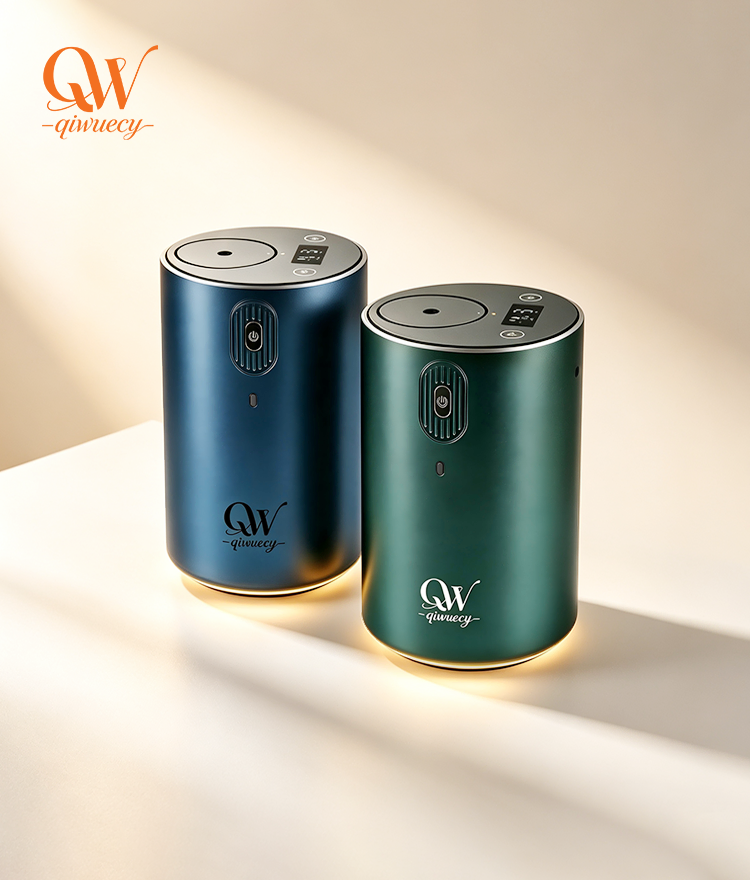
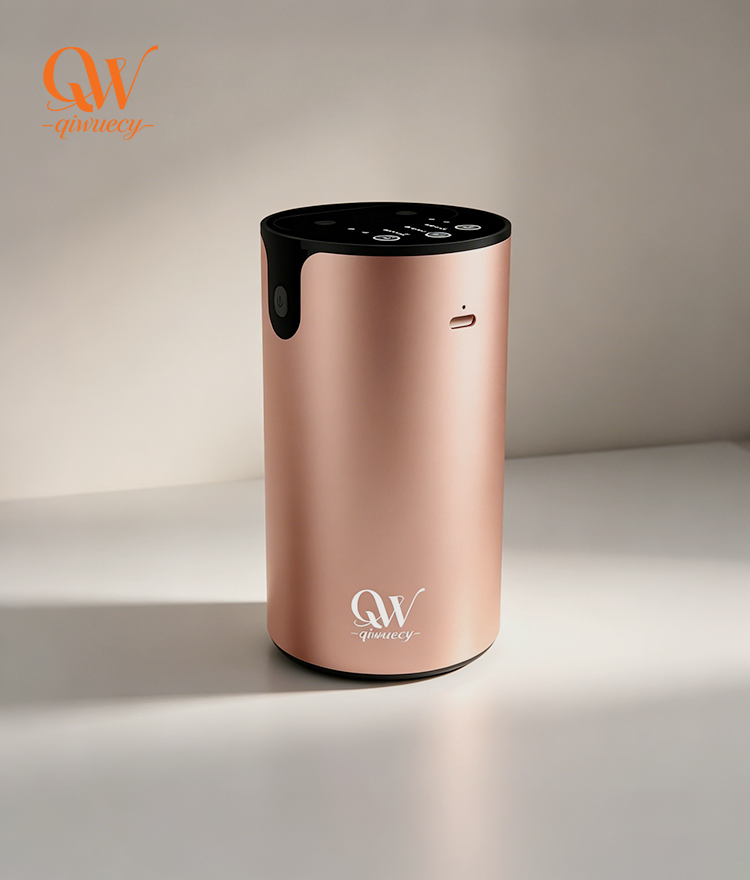
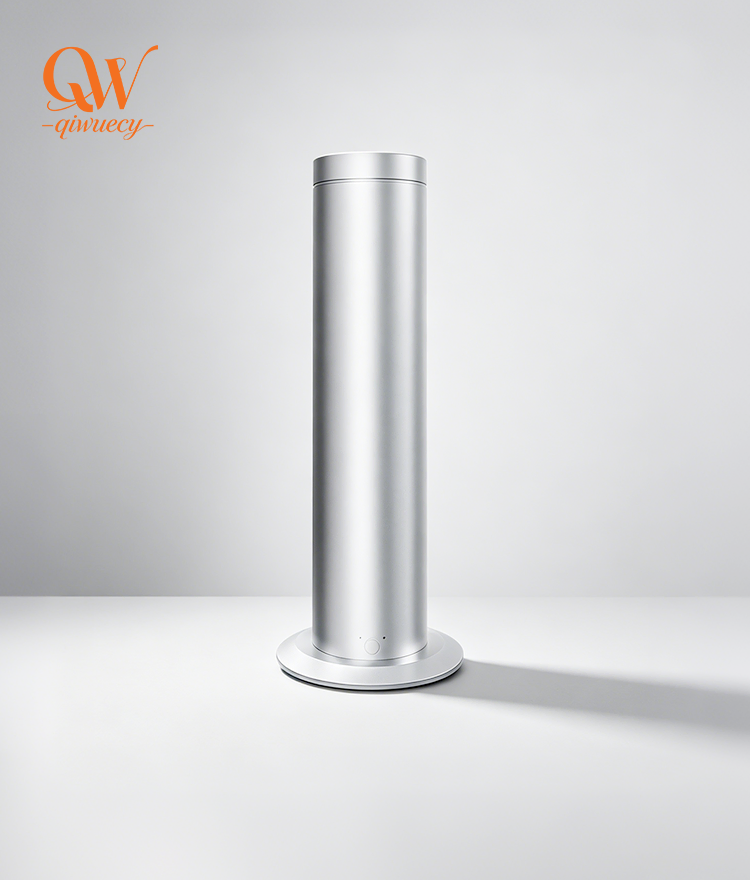
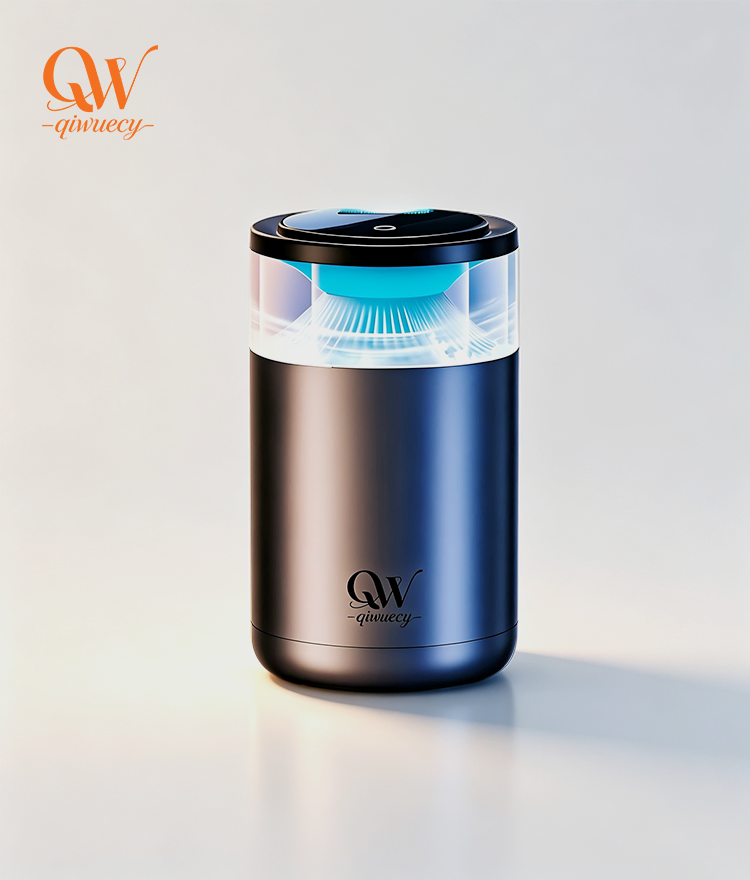
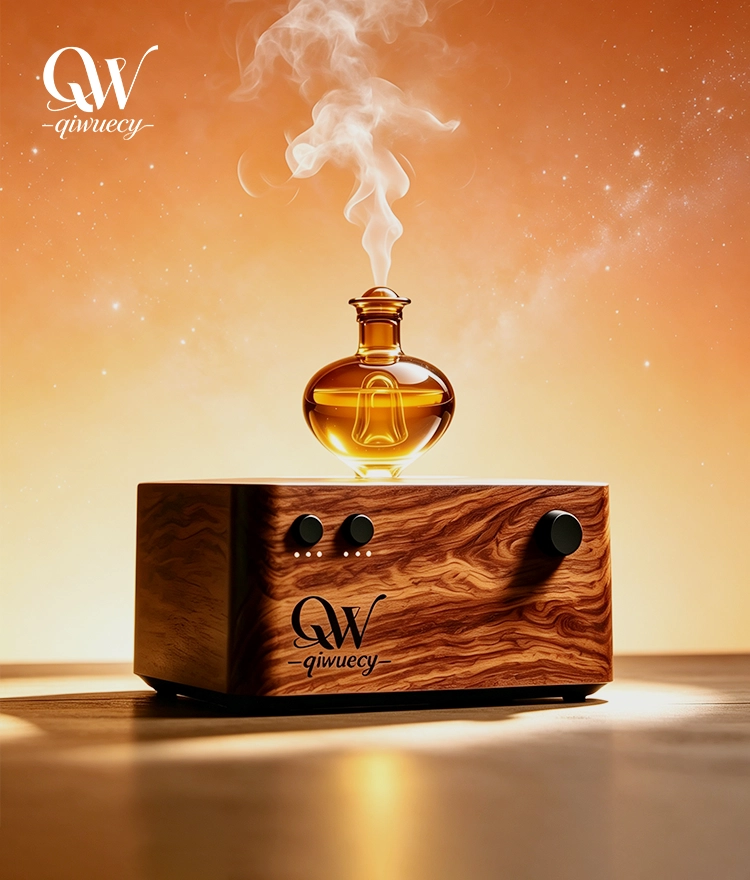
4. Product Spotlight: The QW053 Smart Waterless Aroma Diffuser
Knowing the engineering principles is great, but how do they translate into a real-world product? The QW053 Smart Waterless Aroma Diffuser is the ultimate culmination of our noise-reduction technology.
Why the QW053 Sets the Standard for Quiet Operation:
-
Damping Layer + Precision Bracket: The QW053 integrates our high-damping layer and modular clamping bracket, completely isolating the pump’s vibration for a truly peaceful experience.
-
Waterless Technology: Unlike traditional ultrasonic diffusers that require water, the QW053 uses cold-air diffusion to turn 100% pure essential oil into nanoparticles. No water means zero water-vibration noise, and no water dilution means a more potent, longer-lasting aroma.
-
Smart & Efficient: It features intelligent timer and intermittent modes, minimizing continuous operation time while maximizing oil efficiency.
-
Premium Build: Crafted with aviation-grade materials and precision manufacturing, it delivers a high-end, luxurious feel that matches its whisper-quiet performance.
Who Is the QW053 For?
-
High-End Hotels & Spas: For an undisturbed, immersive relaxation experience.
-
Bedrooms & Nurseries: Sleep-friendly operation that won’t disturb your rest.
-
Offices & Meeting Rooms: Ambient scenting without distracting background noise.
-
B2B & OEM Partners: Looking to source a competitive, high-quality OEM waterless aroma diffuser to elevate their product line.
<a id="b2b-value"></a>
5. Commercial Value for B2B & OEM Waterless Aroma Diffuser Buyers
A diffuser engineered with a superior internal vibration damping structure isn’t just a better product; it’s a better business decision. The commercial benefits are clear:
-
Higher Product Premium: “Silent operation” is a premium feature. Good engineering justifies a higher retail price.
-
Lower Return Rates: Drastically reduces consumer complaints and returns related to “excessive noise.”
-
Extended Lifespan: Reducing vibration fatigue protects other internal precision components, improving overall reliability.
-
Optimized Assembly: The modular bracket and clamping design streamline factory assembly lines, saving time and labor costs [2].
<a id="buyers-guide"></a>
6. Buyer’s Guide: How to Choose a Quiet Diffuser
When sourcing or purchasing, look beyond the brand name. Use these technical benchmarks:
-
Check the dB Rating: Aim for under 35 dB for a “quiet” rating, and under 30 dB for “excellent.” Some ultra-quiet models now operate at 25 dB or even lower.
-
Verify Damping Features: Look for terms like “damping layer,” “shock-absorbing pad,” “sound insulation cotton,” or “buffer mounts” in the specs.
-
Ask About Pump Installation: Is it rigidly screwed, or mounted on elastic rubber bases? The latter is essential for noise reduction. A properly designed system will use a shock-absorbing pad that covers the pump’s outer wall and abuts against the mounting base.
-
Read Nighttime Reviews: Look for authentic user feedback specifically regarding nighttime or quiet-room usage.
<a id="faq"></a>
7. Frequently Asked Questions (FAQ)
Q1: Will the damping layer shorten the lifespan of the air pump?
A: Absolutely not. The damping layer only absorbs high-frequency vibrations; it does not interfere with the pump’s normal operational stroke. In fact, by preventing vibration fatigue on the housing and other parts, it indirectly extends the lifespan of the entire device.
Q2: Is this structure applicable to all types of diffusers?
A: This structure is primarily designed for air-pump-driven atomizing diffusers (like waterless diffusers). Ultrasonic diffusers that use a vibrating plate require a different damping approach.
Q3: Does the damping material degrade over time?
A: We use high-quality, fatigue-resistant, and anti-oxidation damping materials. Combined with the detachable bracket design, they maintain stable performance for years, even under continuous operation.
Q4: What is the difference between a waterless diffuser and a traditional ultrasonic one regarding noise?
A: Ultrasonic diffusers rely on high-frequency vibrations in water, which creates splashing and vibration noise. The QW053 waterless aroma diffuser uses cold-air diffusion, eliminating water-related noise altogether and preventing noise increases caused by limescale buildup.
Q5: How can I further reduce noise in my current setup?
A: Place the diffuser on a soft surface (like a cloth or anti-slip mat) rather than a hollow table, to prevent environmental resonance from amplifying the noise.
<a id="conclusion"></a>
8. Conclusion & Next Steps
Silence is the ultimate luxury, and it’s the ultimate mark of quality in aroma diffusion [5]. Through the combination of a damping layer, clamping assembly, fixing bracket, and sound insulation, we have successfully conquered the age-old problem of air pump noise. This is the magic of structural engineering—invisible technology, audible silence.
If you are looking for a truly quiet, high-performance diffuser, the QW053 Smart Waterless Aroma Diffuser stands as the benchmark in today’s market.
Are you an OEM buyer looking for complete 3D structural drawings or a QW053 test sample?
[Contact our engineering team today: marketing@qiwuecy.com ]
<a id="references"></a>
9. References
-
Anderson, M. & Chen, L. (2022). Automotive Interior Sensory Design: Trends in Premium Vehicle Customization. Journal of Automotive Engineering and Technology, 17(3), 45–62.
-
Global Market Insights. (2023). Car Air Freshener Market Report: Technology Analysis and Forecast 2023–2030. Industry Research Publications.
-
Roberts, J. (2021). Essential Oil Atomization Technologies: Comparative Performance in Mobile Environments. International Journal of Fragrance Science, 8(2), 112–128.
-
Society of Automotive Engineers. (2023). SAE Standards for Automotive Accessory Certification and Safety Testing. SAE International Technical Papers.
-
Williams, K. & Zhang, H. (2022). Luxury Automotive Brand Differentiation Through Olfactory Marketing. Business Strategy Review, 29(4), 78–94.
-
Zhou, T. (2023). Compressed Air Diffusion Systems: Engineering Principles and Automotive Applications. Mechanical Engineering Advances, 12(1), 33–51.
Online Message