Nov 2, 2026
Lavender Essential Oil Wholesale Guide: Origin Comparison, Quality Grades & B2B Sourcing
Wholesale lavender Essential Oil is one of the world’s most trafficked aromatic raw commodities, but also one of the most inconsistently rated. Two barrels marked “pure lavender oil” might be miles apart in origin, chemical makeup, and appropriateness for end use—and you’re paying for that difference the instant it hits your manufacturing line. This article explains to foreign buyers the three factors that really define sourcing risk: geographic origin, quality grade, and supplier verification method. If you are developing a hotel diffuser program, a massage oil foundation, or a line of skin care, knowing how origin and grade come together can help you specify the perfect lavender single essential oil before you even ask for a price.
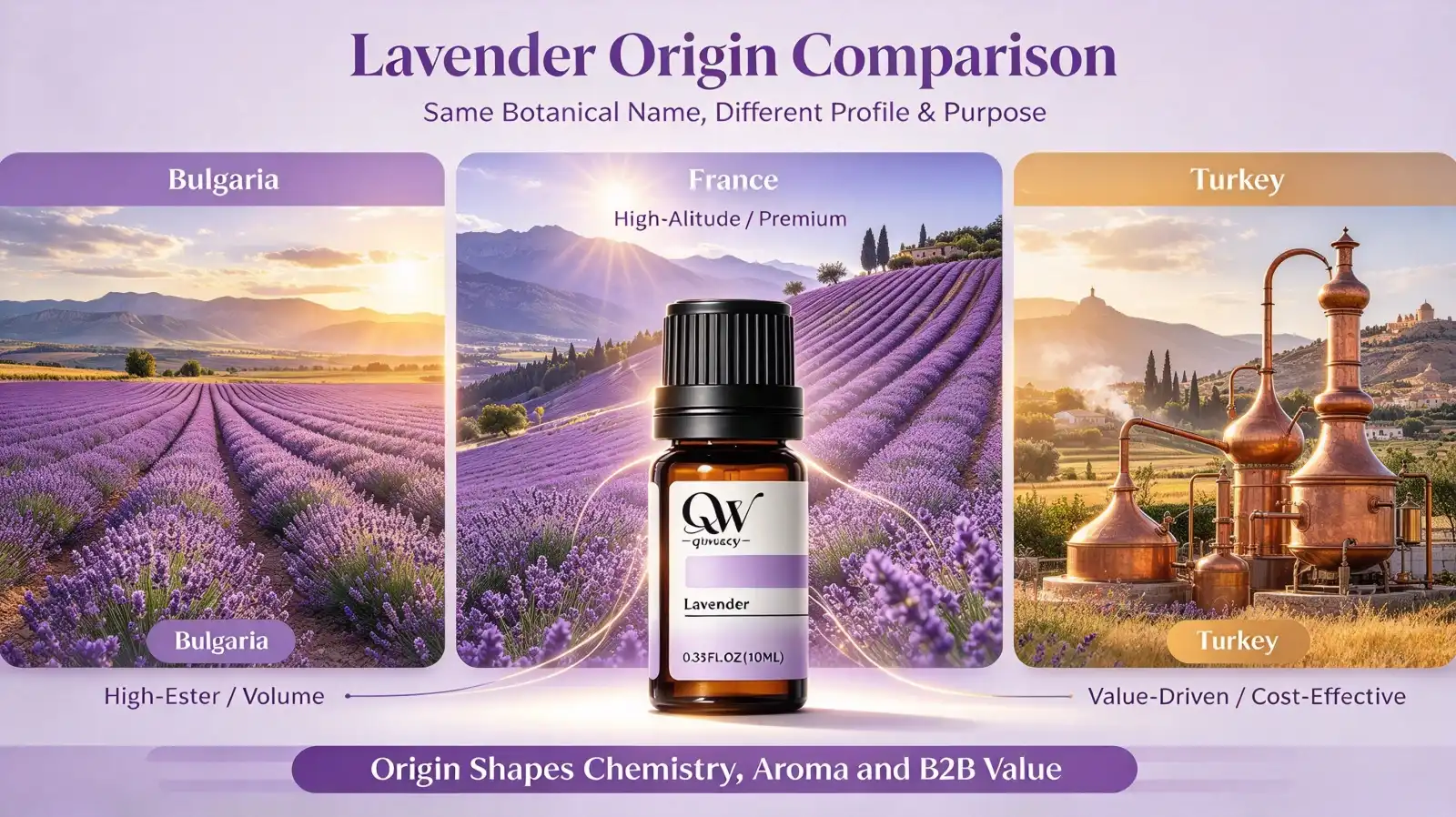
Origin Comparison: Bulgaria, France & Turkey — Which Lavender Fits Your Formulation?
Bulgarian Lavender: High-Ester Content for Volume Manufacturing
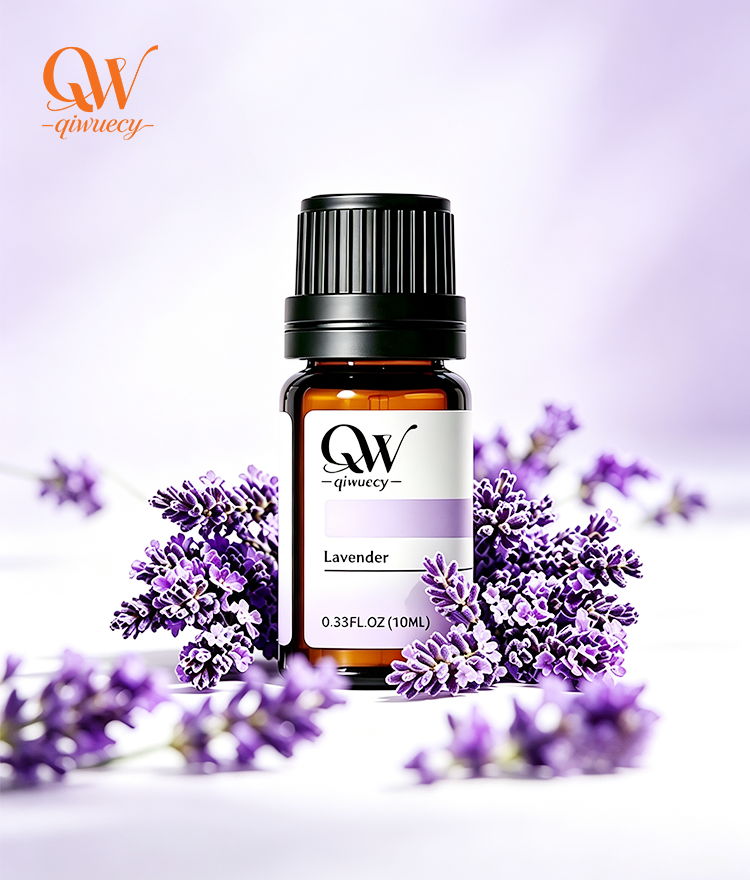
For decades, Bulgaria has been cultivating the world’s biggest area of lavender, and the environment surrounding the Kazanlak valley constantly yields oil with a high level of linalyl acetate, the ester that gives lavender its smooth, rounded sweetness. For buyers looking for a reliable lavender single essential oil in production volume, the Bulgarian origin is usually the default suggestion, as harvest scale keeps batch-to-batch variation narrow, which is ideal for cosmetic manufacturers and fragrance brands looking for predictable performance across thousands of units. Suppliers of Bulgarian origin, like the lavender line on the product page for Qiwu's lavender single essential oil, often provide GC-MS evidence so that formulators may validate the ester content before buying. According to ISO 3515 — Oil of Lavender (Lavandula angustifolia Mill.), lavender oil quality evaluation includes characteristic chemical composition requirements that help buyers assess authenticity and consistency between batches.[1]
French High-Altitude Lavender: Scarcity, Prestige & Premium Positioning
French lavender at higher elevations in Provence, in particular wild population lavender obtained from altitudes over 800 meters, is regarded for a more nuanced, grassy perfume that premium fragrance houses eagerly seek. Yield per hectare is much lower than lowland farming, and limited harvest windows that are reliant on weather keep supply tight and costs high compared to other sources. Buyers that are marketing a luxury skincare line, a boutique hotel brand, or a niche fragrance product are typically specifying French high-altitude material exactly because scarcity enhances the brand narrative. The lavender single essential oil from this origin is one that should be evaluated knowing that you are paying a significant premium over a Bulgarian or Turkish counterpart, and that you should verify documentation of the harvest year, since French yields might vary more annually. Comparative studies on Lavandula angustifolia chemotypes across European growing regions indicate that geographical factors can influence essential oil composition and aromatic profiles, making origin verification important for professional sourcing decisions.[3]
Turkish Lavender: Value-Driven Sourcing for Cost-Sensitive Buyers
Turkey’s Isparta region has emerged as a significant lavender-growing area over the last 20 years, providing purchasers with a middle-ground choice, providing sufficient chemical consistency at a considerably cheaper landed cost than French material. This origin is attractive to distributors and private label firms establishing entry or mid-tier lines where profit discipline trumps provenance narrative. However, Turkish lavender may still be able to fulfill accepted international standards, but purchasers should seek comparative GC-MS data against Bulgarian benchmarks since regional soil and altitude fluctuation might change the linalool-to-ester ratio more than would be anticipated from a "value" provenance.
Matching Origin to End-Use: A Quick Decision Framework
Sourcing teams connect origin to individual SKUs, rather than defaulting to a single origin across a full catalog, for better cost-to-quality results. Bulgarian or Turkish material is great for mass market diffuser mixes and functional cosmetics. French high-altitude sourcing is best for luxury skincare and exquisite fragrance where the scent premium justifies expense. A pragmatic strategy is to dual-source: stock a Bulgarian lavender single essential oil as the workhorse SKU, and maintain a limited French allocation for flagship brands where provenance underpins premium pricing.
Quality Grades Decoded: Aromatherapy vs Commercial vs Perfumery Grade
Aromatherapy-Grade Lavender: What Buyers Should Verify
Lavender in aromatherapy quality is sold unadulterated, single origin, and not reconstituted synthetically, and is the benchmark against which most B2B buyers judge everything else. Never trust a label to verify this – ask the provider for their latest GC-MS report and check that the linalool and linalyl acetate are within globally accepted ranges, rather than taking a general statement of “100% pure” at face value. Buyers producing wellness goods or aromatherapy mixes should also check the extraction procedure since steam-distilled flowering tops gathered at full bloom provide a more consistent lavender single essential oil profile than overmature plant material. According to the European Pharmacopoeia monograph on Lavender Oil, essential oil quality assessment should consider botanical identity, analytical characteristics, and compositional requirements rather than relying only on labeling claims.[2]
Commercial-Grade Lavender: Balancing Cost and Consistency
Commercial-grade material is designed for functional fragrance applications — home cleansers, candles, air care, and mid-tier cosmetics — where pure olfactory purity is less important than cost-effectiveness and batch-to-batch uniformity on a large scale. This grade may mix many harvest lots from the same origin to even out seasonal fluctuation, a valid procedure as long as the provider makes this clear. For teams with numerous SKUs, commercial-grade lavender single essential oil frequently offers the greatest total cost of ownership, provided the provider gives a COA certifying no extension with synthetic linalool or lavandin distillate.
Perfumery-Grade Lavender: Olfactory Precision for Fine Fragrance
The lavender is picked for perfumery, and sometimes re-rectified for extraordinary olfactory clarity, for fragrance houses and premium brands that create a trademark aroma around a single dominating note. This is the most expensive category and tends to have higher chemical standards than either aromatherapy or commercial grade, and also organoleptic assessment remarks from the supplier’s perfumer. If you are a buyer producing a trademark hospitality smell or fine fragrance line, this is the grade you should budget for especially and ask for an aroma sample to be reviewed by your own perfumer before signing a contract.
Reading a GC-MS Report Like a Sourcing Professional
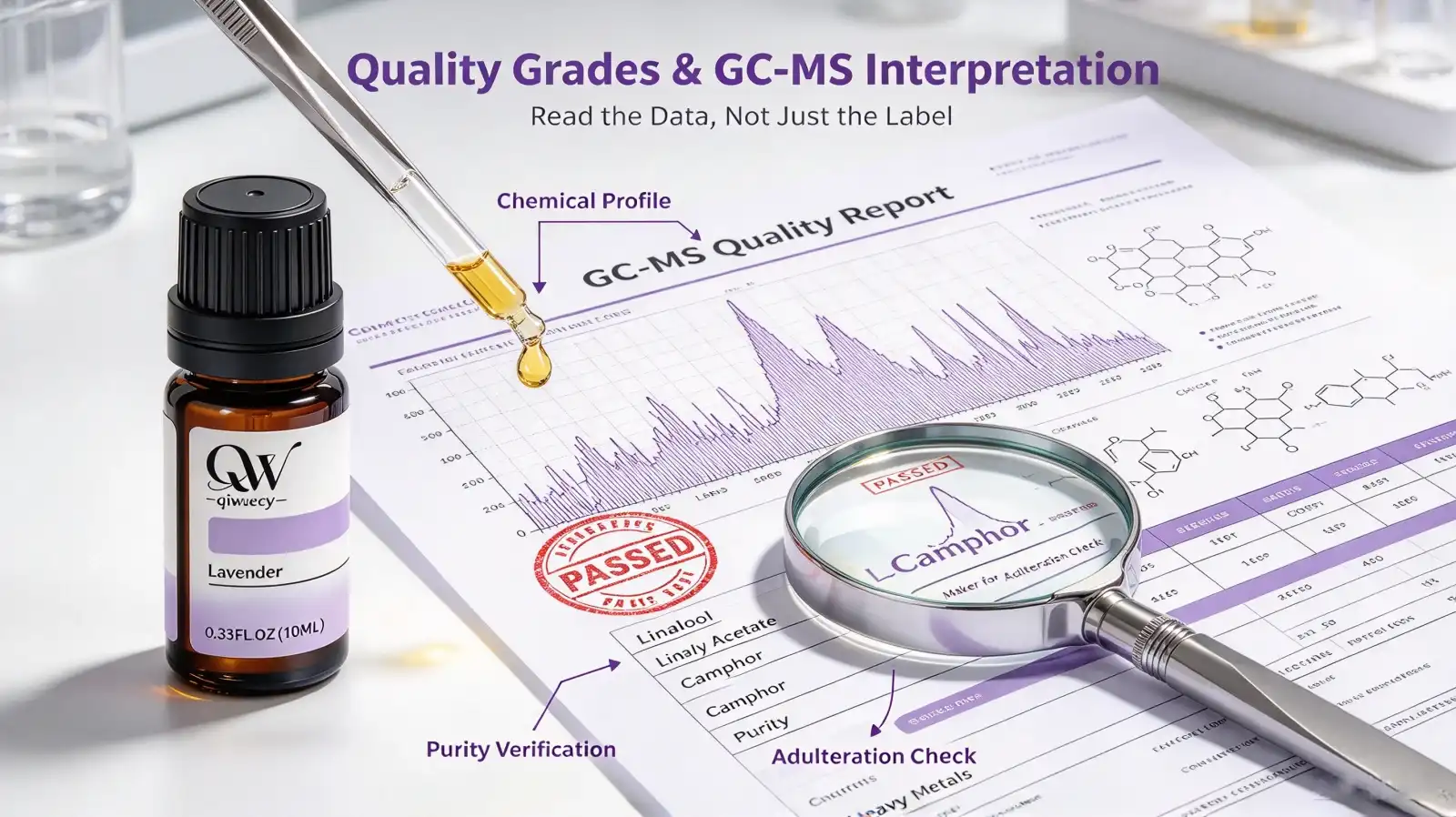
The GC-MS report is the single most helpful document that a lavender supplier can send, but only if the buyer understands how to read it. Look at the percentages of linalool and linalyl acetate first. Then look for camphor and 1,8-cineole; both of these should be low in real, authentic lavender oil. More camphor and less ester is a symptom of lavandin adulteration than real Lavandula angustifolia. Cross-reference the batch report to the normal reported range for the origin rather than a single universal figure. Bulgarian, French, and Turkish material have somewhat varied predicted chemotype windows. Research published in the Journal of Essential Oil Research has examined GC-MS authentication methods for commercial lavender oils and highlighted the role of chemical markers in identifying compositional differences and possible lavandin adulteration.[4]
Indicative GC-MS Composition Ranges by Legal Standard & Adulterant Signals
| Marker Compound | True Lavender ISO 3515:2002 Limits | True Lavender Ph. Eur. Limits | Lavandin / Adulterant Signal |
|---|---|---|---|
| Linalool | 20–43% | 20–45% | Can overlap with true lavender; not a standalone marker |
| Linalyl acetate | 25–47% | 25–47% | Frequently lower, often under 25% |
| Camphor | ≤ 1.5% | ≤ 1.2% | Markedly elevated, often > 3% |
| 1,8-Cineole | ≤ 3.0% | ≤ 2.5% | Noticeably elevated |
Compliance Note:
Compliance must be determined against the statutory limits of ISO 3515:2002 or the European Pharmacopoeia (Ph. Eur.). While terms like "aromatherapy grade" or "commercial grade" indicate purity, origin, and sensory profiles, all grades must first meet these legal compositional limits for true lavender (Lavandula angustifolia). If the GC-MS report shows camphor or cineole exceeding the legal limits for true lavender—even if linalool and linalyl acetate are within range—the batch should be strongly suspected of being adulterated with lower-cost lavandin or spike lavender.
Sourcing Essentials: MOQ, Sample Verification & Spotting Lavandin Adulteration
Typical MOQ Tiers for Wholesale Lavender Essential Oil
Most established suppliers structure pricing across three tiers: a small paid or complimentary sample for initial screening, an entry bulk tier in the low-kilogram range for pilot runs, and a full production tier measured in drums for confirmed demand. New B2B relationships should never skip the pilot tier, even with attractive pricing on larger volumes, because it is the only reliable way to confirm the lavender single essential oil received at scale matches the sample that won approval. Distributors managing seasonal demand spikes should also confirm whether MOQ tiers flex around peak ordering windows.
How to Structure a Sample Evaluation Before Committing
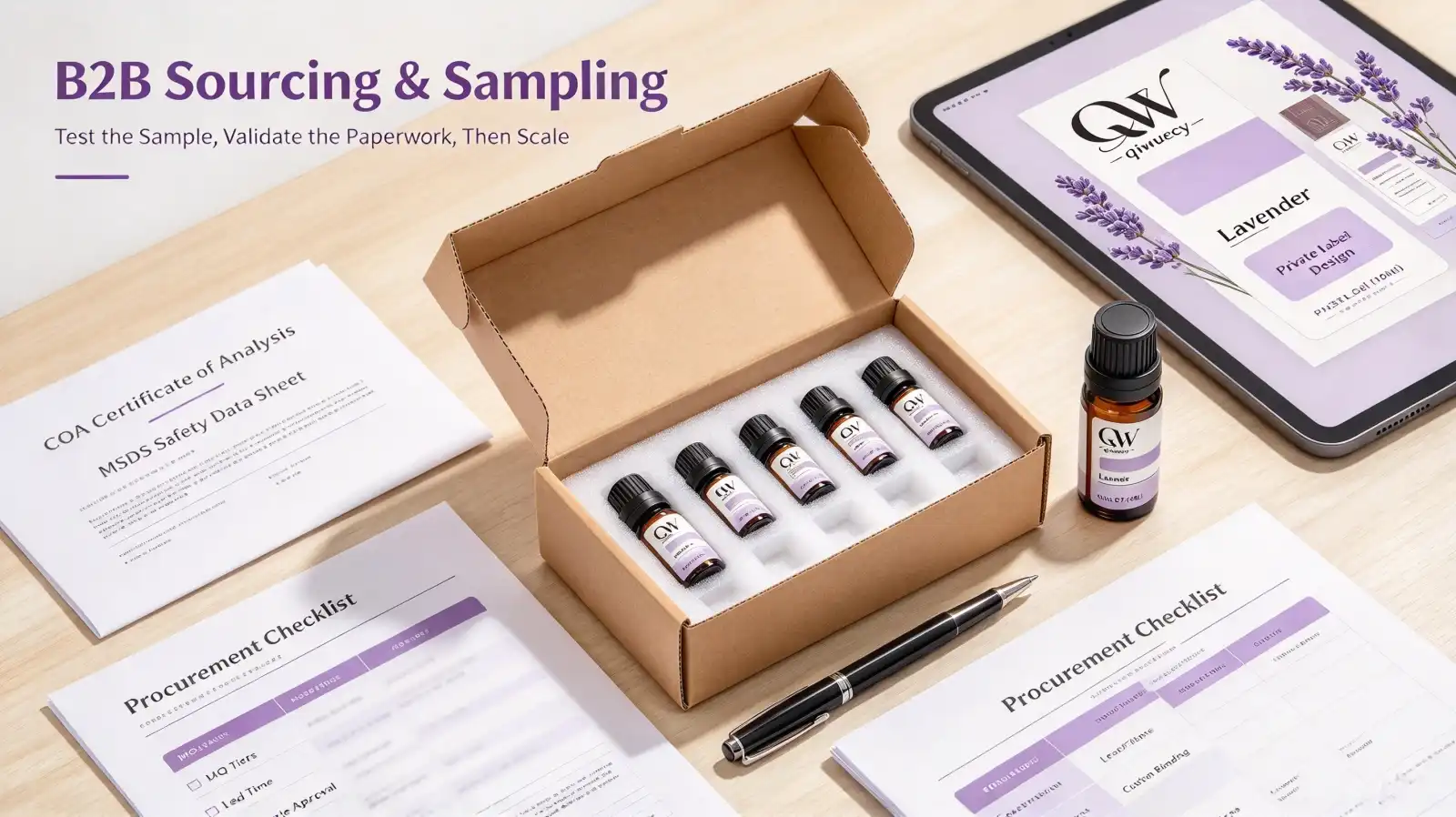
A disciplined sample evaluation should run three checks in parallel: an olfactory panel test by your own team, a GC-MS report cross-checked against published origin benchmarks, and a small-batch formulation trial in the actual finished product. Skipping the formulation trial is a common mistake — an oil can pass aroma and lab testing individually while still behaving unpredictably once blended into a carrier oil or wax base. Buyers should also request two samples from different production batches, since single-batch approval does not guarantee consistency across a full order.
Detecting Lavandin Blending Through Aroma and Documentation
Lavandin, a hybrid of true lavender and spike lavender, is the most common adulterant in the wholesale market because it is cheaper to produce and shares a superficially similar floral-herbaceous character. On the documentation side, elevated camphor and cineole readings on a GC-MS report are the clearest red flag, as outlined in the composition table above. On the sensory side, lavandin typically presents a sharper, more medicinal top note compared to the softer profile of true lavender, especially once diluted. Buyers sourcing a genuine lavender single essential oil for premium formulation should insist on species confirmation (Lavandula angustifolia, not Lavandula x intermedia) in writing on the COA. Studies on GC-MS authentication of lavender oil have shown that compositional analysis can support differentiation between true lavender and lavandin-related materials.[4]
Certifications and Documentation to Request from Suppliers
Beyond the GC-MS report, a credible supplier should provide ISO 9001 quality management certification, GMP compliance documentation, a current MSDS for import clearance, and, where relevant, CE, FCC, or RoHS compliance for any bundled packaging or diffusion hardware. Buyers importing into regulated markets should also confirm HS code alignment and country-of-origin documentation early, since mismatched paperwork is a common cause of customs delay for bulk shipments.
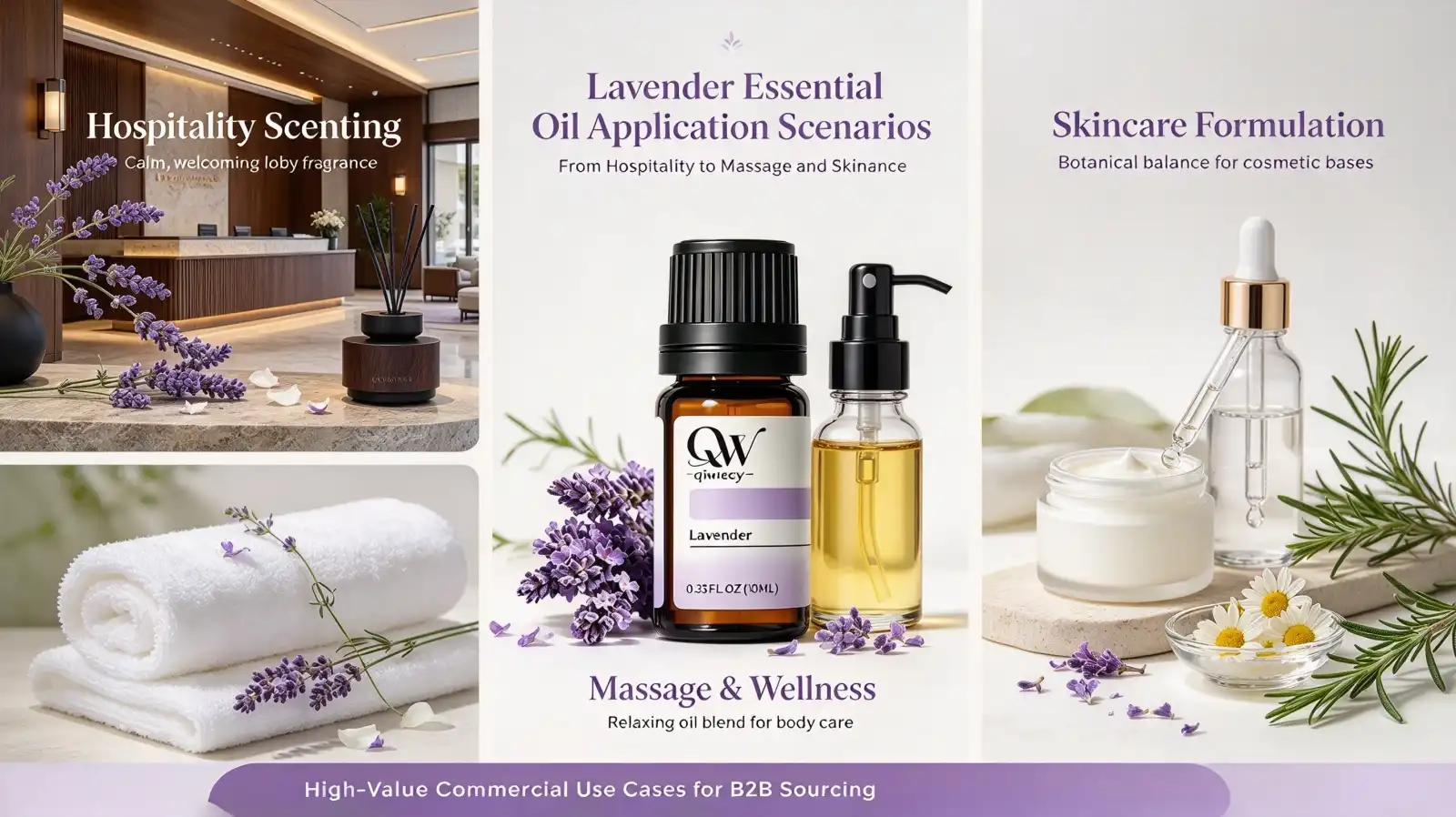
Application Scenarios: Hospitality Scenting, Massage Oil Bases & Skincare Formulation
Hotel and Hospitality Scent Programs
Lavender is the most common trademark aroma used by hospitality businesses of any essential oil, mostly because clients repeatedly link the scent with relaxation and perceived room cleanliness. A good rule of thumb for lobby and guest-room diffusion is to dilute in a moderate range so that it blends well with woody or citrus base notes, but not so much as to overpower a shared environment. For teams creating a multi-property scenting program, it’s important to standardize on a single origin and grade for their lavender single essential oil supply to maintain the distinctive scent constant rather than sourcing opportunistically batch to batch.
Massage and Body Oil Base Formulation Ratios
For massage and body oil use, lavender is usually diluted in a carrier oil at a low percentage, much below the level that would cause irritation for sensitive skin with prolonged contact. Here, spa and wellness firms use aromatherapy-grade material, as extended skin contact raises the bar for purity certification compared to ambient diffusion usage. Any fresh batch should be pilot-tested by formulators before scaling, since the interactions of the carrier oil might gradually affect how the lavender note reads on skin. According to the International Fragrance Association (IFRA) standards, fragrance ingredients including naturally occurring components such as linalool and limonene require consideration of usage levels and allergen declaration requirements in applicable product categories.[5]
Skincare and Cosmetic Application Dosage Guidelines
Cosmetic industry specification sheets for lavender oil are commonly used by skincare formulators, and it is common to use a limited use range when adding this to face, body, or hair care formulations. Lavender works well with other botanicals such as chamomile and rosemary; therefore, many businesses utilize it as a supporting note in a wider natural scent system rather than a solitary active. Leave-on goods: Buyers developing leave-on products should seek lavender single essential oil in either aromatherapy-grade or perfumery-grade with complete batch documentation. The contact duration of leave-on products increases the regulatory scrutiny of purity.
Custom Blending Support for Private-Label Buyers
Many wholesale suppliers now provide bespoke blending services that mix lavender with complementary botanicals to produce a distinctive trademark aroma for private label brands, which may be a substantial distinction for distributors competing on something other than pricing alone. This service usually has a slightly higher MOQ than single-note purchases but gives consumers the opportunity to lock in a distinctive olfactory identity that is tougher for rivals to duplicate. Brands that go down this path should ask for GCMS and stability data on the particular blend since the addition of a bespoke blend adds more variables to the standard lavender spec. Professional essential oil sourcing guidelines emphasize supplier transparency, documentation review, and purity verification when selecting essential oil raw materials for commercial applications.[6]
Quick Procurement Snapshot
Executive summary — what buyers need to know before sourcing:
- Bulgarian lavender offers the most consistent ester profile for volume manufacturing; French high-altitude lavender commands a premium due to limited harvest yield; Turkish lavender is the value-positioned option for cost-sensitive formulations.
- Grade determines fit-for-purpose: aromatherapy-grade for therapeutic and wellness use, commercial-grade for functional fragrance and household products, perfumery-grade for fine fragrance houses.
- Always request a batch-specific GC-MS report before committing to a bulk order — linalool and linalyl acetate ranges are the fastest way to confirm authenticity.
- Lavandin adulteration is the most common quality issue in the wholesale market; camphor and cineole levels expose it quickly on paper even when the aroma seems close.
- Sample-first, contract-second remains the safest procurement sequence for new supplier relationships.
| Category | Typical Requirement |
|---|---|
| Certifications to request | ISO 9001, GMP, MSDS, Certificate of Analysis (COA), batch-specific GC-MS report |
| MOQ (minimum order quantity) | Sample tier: 10–50 ml; entry bulk tier: 1–25 kg; production tier: 25–200+ kg drums |
| Typical lead time | Sample dispatch: 3–5 business days; bulk production order: 15–30 days depending on volume |
| Sample policy | Paid or free trial sample with COA and GC-MS report attached; refundable against first bulk order in many cases |
| Primary application scenarios | Hospitality scent diffusion, massage/body oil bases, skincare and cosmetic formulation, home fragrance and candle manufacturing |
Conclusion
Sourcing wholesale lavender single essential oil comes down to three disciplined checks: match the origin to your formulation goals, confirm the grade against a real GC-MS report rather than a label claim, and always validate a new supplier through a paid or trial sample before committing to bulk. Buyers who build this verification habit into every purchase order consistently avoid the two most costly mistakes in the category — inconsistent aroma across batches and undisclosed lavandin blending. If your team is ready to move from research to a verified quotation, request a current specification sheet and sample today.
FAQ
Q1: What is the main difference between true lavender oil and lavandin?
True lavender (Lavandula angustifolia) has low camphor content and a soft, rounded aroma, while lavandin (Lavandula x intermedia) carries noticeably higher camphor and cineole levels, giving it a sharper, more medicinal top note and a lower price point.
Q2: Which origin is best for a hospitality diffusion program?
Bulgarian lavender is generally the most practical choice for hospitality scenting due to its consistent ester profile and reliable supply volume, keeping the signature scent stable across multiple properties.
Q3: How can I confirm a lavender essential oil batch is authentic before ordering in bulk?
Request a batch-specific GC-MS report and check that linalool, linalyl acetate, camphor, and cineole fall within recognized ranges for the stated origin, then confirm with a physical sample evaluation before placing a full production order.
Q4: What MOQ should I expect when sourcing lavender essential oil for the first time?
Most suppliers offer a small sample tier first, followed by an entry bulk tier in the low-kilogram range for pilot runs, before moving to full production-scale drum quantities once quality is confirmed.
Ready to Source Lavender Essential Oil From Qiwu?
Qiwu Technology (Shenzhen) Co., Ltd. brings 14 years of atomization and extraction expertise, over 100 invention patents, and ISO9001/GMP-certified manufacturing to every batch of lavender single essential oil we supply. With daily production capacity built for global scale and full Certificate of Analysis (COA), GC-MS report, Material Safety Data Sheet (MSDS), Certificate of Origin, Phytosanitary/Health Certificate, as well as the IFRA compliance statement required by the importing country, we support fragrance brands, formulators, and distributors from sample request through recurring bulk supply. Request your GC-MS report and trial sample today by contacting our team at marketing@qiwuecy.com — our sourcing specialists will help you match the right origin and grade to your formulation before you commit to a purchase order.
References
1. International Organization for Standardization, ISO 3515 — Oil of Lavender (Lavandula angustifolia Mill.), quality specification standard.
2. European Pharmacopoeia, Monograph on Lavender Oil (Lavandulae aetheroleum), official compendial standard.
3. Peer-reviewed comparative chemotype study on Lavandula angustifolia essential oil composition across European growing origins, published in the journal Plants.
4. Journal of Essential Oil Research, studies on GC-MS authentication methods for detecting lavandin adulteration in commercial lavender oil.
5. International Fragrance Association (IFRA), Standards on Linalool and Limonene allergen declaration thresholds.
6. Alliance of International Aromatherapists, Professional Sourcing and Purity Verification Guidelines for essential oil raw materials.
Online Message